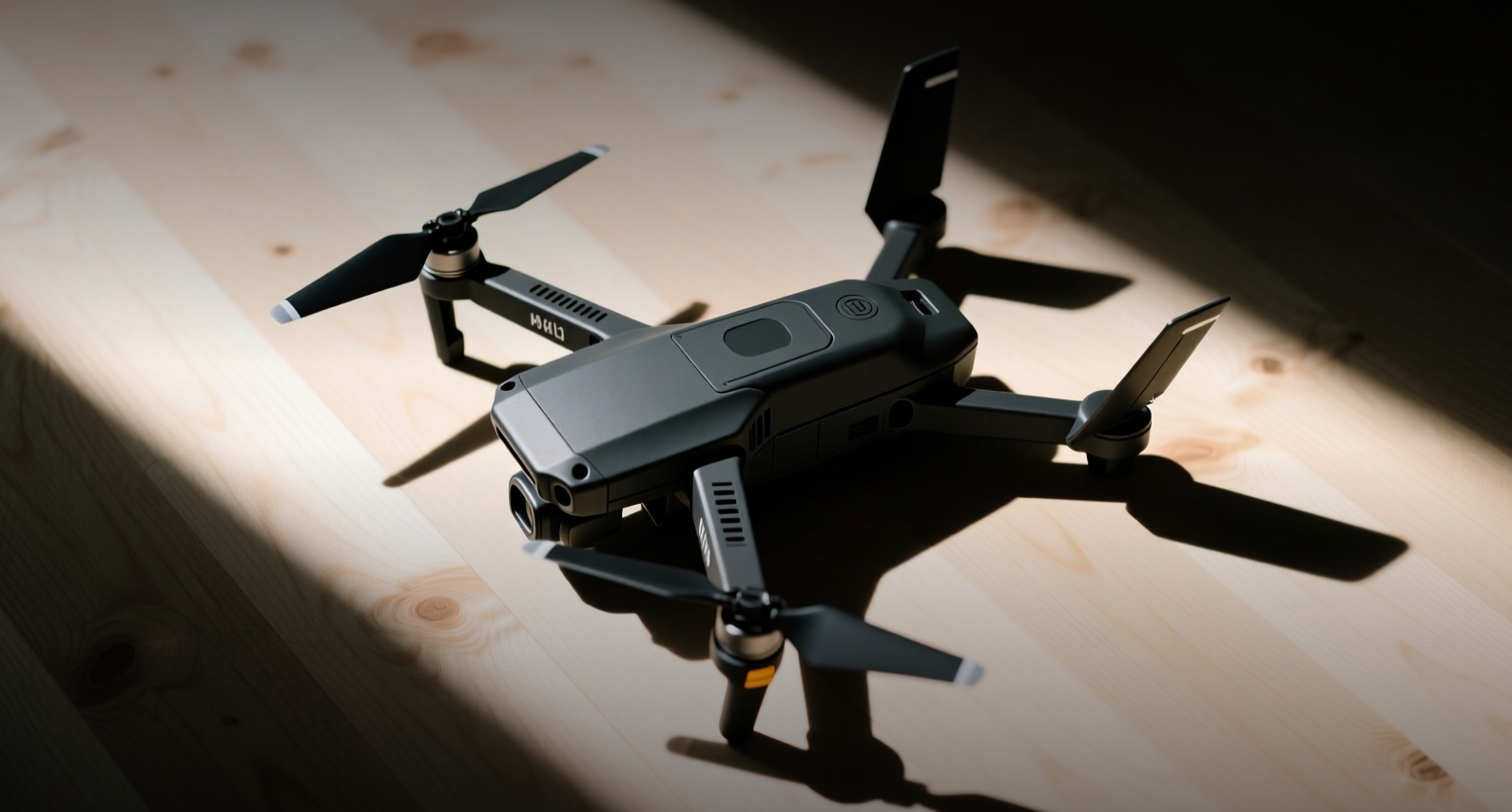
Drones and AI-guided autonomous systems are rendering legacy tanks, planes and warships obsolete faster than defense ministries can adapt, threatening to devalue hundreds of billions in military hardware.
Drones now account for more than 90% of enemy losses on Ukraine's front lines, a statistic that defense officials across NATO say signals the most rapid shift in military technology since the advent of gunpowder.
"The character of warfare is changing fundamentally," Gen. Carsten Breuer, Germany's chief of defense, said. "Armed forces must be able to adapt faster, integrate new technologies, and learn at speed. If we fail to adapt, we will not be able to prevail."
Ukraine introduced an "e-points" procurement system last August that lets brigades purchase drones directly from manufacturers based on confirmed enemy kills, bypassing traditional centralized defense budgets. The U.S. expended a large share of its precision munitions arsenal against Iran earlier this year without achieving a strategic defeat, undermining the doctrine that air superiority and precision firepower alone decide conflicts. German manufacturer Helsing now supplies autonomous drones that patrol highways in occupied southern Ukraine, using AI pattern recognition to identify fuel trucks and pursue them once authorized by a human operator.
The shift threatens to devalue hundreds of billions of dollars in legacy platforms — tanks, fighter jets and aircraft carriers — that dominate Western defense budgets, while redirecting spending toward software-defined systems that can be updated in weeks rather than years. The U.S. military, the world's largest institutional consumer of oil at about 4.6 billion gallons annually, faces a parallel challenge: fuel delivery in remote combat zones can cost as much as $400 per gallon, according to Electric Choice's analysis of military energy consumption.
Autonomy Arrives on the Battlefield
"Autonomy is just starting to hit the battlefield now, but it will be the bigger game-changer over the next five to 10 years because it is all-encompassing and fundamentally changes what used to be a human-centric battlefield," Helsing co-CEO Gundbert Scherf said. Russia has begun deploying AI-guided Molniya drones that operate without a human in the loop, relying on onboard targeting rather than satellite guidance.
Louis Mosley, head of U.K. and Europe operations at Palantir, said 2026 may be remembered as a historic pivot. "I wouldn't be surprised if 2026 is remembered for centuries to come as a year in which a major breakthrough in military technology was made — akin to gunpowder and the like — which is autonomy," he said.
The speed of iteration has become the decisive variable. Ukraine's new procurement model treats weapons as subscription services rather than fixed assets, with engineers embedded on front lines. "We have abandoned the model where engineers receive a precise order, to make a certain missile, tank or drone, and have moved on to a model where engineers are on the front line, sitting down, having a smoke, drinking coffee with the troops and figuring out what is the problem and how to solve it together," said Iryna Terekh, CEO and chief technology officer of Fire Point, a Ukrainian defense manufacturer.
Legacy Platforms Face an Existential Question
The implications for traditional defense contractors are stark. If drones and autonomous systems can achieve localized air superiority without a conventional air force — as Ukraine has demonstrated — the case for investing billions in next-generation fighter jets and main battle tanks weakens. "You cannot imagine war right now without drones, but you never know what will happen in five years, where the battlefield will be, and whether the drones will be the best thing you could use there," Dutch Defense Minister Dilan Yeşilgöz-Zegerius said. "So you have to have an industry, and also a military and government, that are flexible — and, to be honest, governments do not move fast."
Not all analysts agree the shift constitutes a revolution. "Revolutions in warfare are often declared but rarely arrive. Most military developments, like the current trends in the use of drones and precision strikes, are evolutionary," said Michael Kofman, a senior fellow at the Carnegie Endowment. "Nobody doubts the impact of gunpowder, but it was on the battlefield for hundreds of years, alongside knights and pikemen."
Yet the pace of change is accelerating. Gen. Michael Claesson, Sweden's chief of defense, said "iterations thanks to technology development are going so fast that it may be misinterpreted as a revolutionary approach." The challenge for NATO militaries is adapting without sacrificing current readiness. "We cannot pause deterrence and tell the adversary to come back in 2039," Breuer said.
This article is for informational purposes only and does not constitute investment advice.