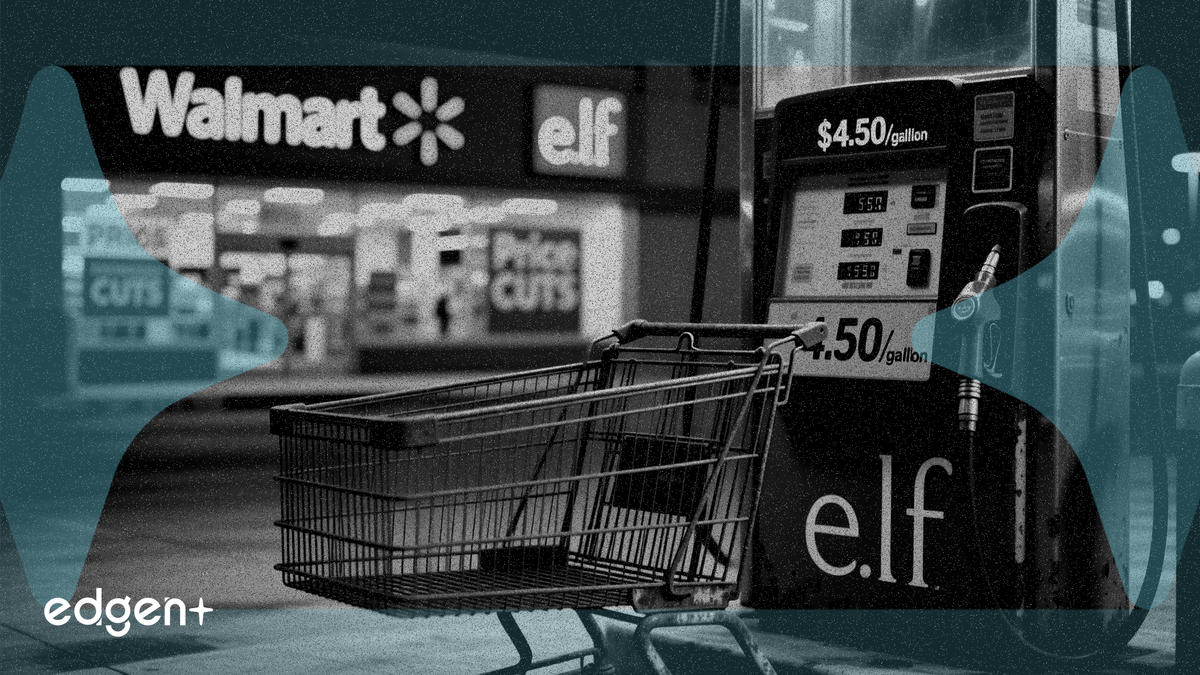
With gasoline prices squeezing household budgets, major U.S. retailers are starting to slash prices on everything from groceries to makeup in a bid to lure strained consumers.
A surge in gasoline prices to over $4.50 a gallon is forcing a profound shift in American spending, with consumers cutting back on discretionary purchases. In response, some of the nation's largest retailers, including Walmart Inc. (WMT) and e.l.f. Beauty Inc. (ELF), are accelerating price cuts to capture a bigger share of a shrinking wallet, signaling a new front in the battle for the cost-conscious shopper.
"We're continuing to invest in prices, extending the rollbacks we started in the second half of last year,” John Furner, CEO of Walmart U.S., said on an earnings call Thursday. “We think the single best return that we can have on a dollar of capital right now is to invest in the customer.”
Walmart, the country's largest grocer, has cut prices on 7,200 items, a 20 percent increase in discounted products from a year ago, according to Chief Financial Officer John David Rainey. The move comes as rival Kroger Co. (KR) plans its own tests of price cuts on thousands of items. Cosmetics company e.l.f. is also reversing previous price increases, with CEO Tarang Amin telling CNBC that consumers "have particularly been suffering with higher costs." A recent $4 price reduction on one of its products resulted in a nearly 40 percent lift in sales, revealing just how sensitive shoppers are to price.
The aggressive pricing strategies reflect a precarious moment for the U.S. consumer. With the national average for a gallon of regular gasoline at $4.56, driven by the war in Iran and the effective closure of the Strait of Hormuz, households are re-evaluating their budgets. A recent Quinnipiac University poll found 54 percent of voters have reduced spending on dining out, while 48 percent have cut back on vacations.
Consumers Swap Vacations for Value
The pressure is evident in behavioral data. A GasBuddy survey showed the proportion of Americans planning a summer road trip of over two hours has dropped to 56 percent from 69 percent last year. At Walmart's own gas stations, Rainey noted the average fuel purchase recently fell below 10 gallons for the first time since 2022.
“That's an indication of stress,” he said.
This financial strain is creating a "K-shaped" dynamic, where higher-income households continue to spend on travel and leisure while lower-income families are forced to cut back, according to analysis from Bank of America. For many, that means trading long-distance vacations for local beaches and hiking trails.
Retailers Race to Reinforce Value
For retailers, the environment has turned into a high-stakes fight for value-seeking customers. E.l.f. Beauty, which sources a majority of its products from China, had previously raised prices to offset the cost of tariffs imposed in 2025. Now, with a $55 million tariff refund expected, the company is testing lower prices on more items to "reinforce our value proposition at a time when the consumer is suffering," Amin said.
The strategy is a calculated gamble. While lowering prices may compress margins, the volume gained from cash-strapped consumers could be crucial for market share. Walmart's Rainey said any potential tariff refunds would be funneled back into "price investment," highlighting the intense focus on keeping customers engaged even as their disposable income is consumed at the pump.
However, retailers' ability to keep prices low may be challenged by the same geopolitical events driving up fuel costs. The disruption in the Strait of Hormuz, which accounts for a third of seaborne fertilizer trade, threatens to increase food input costs and add a new layer of inflationary pressure.
This article is for informational purposes only and does not constitute investment advice.