

A California nuclear startup powered an Nvidia AI chip with an advanced reactor for the first time in the US, bridging two of the most capital-intensive themes in technology.
A California nuclear startup powered an Nvidia AI chip with an advanced reactor for the first time in the US, bridging two of the most capital-intensive themes in technology.
A California nuclear startup powered an Nvidia AI chip with an advanced reactor for the first time in the US, bridging two of the most capital-intensive themes in technology.
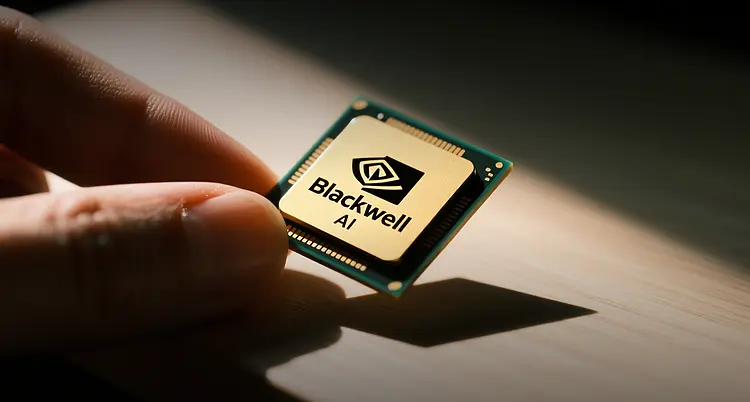
Valar Atomics Inc., a California-based nuclear startup, generated electricity from an advanced helium-cooled reactor to power an Nvidia Corp. Blackwell AI chip on July 1, the first time compact nuclear energy has fed a live US data center.
"This test proves that advanced nuclear can deliver the reliable, carbon-free power that AI infrastructure requires," a company spokesperson said, adding that the demonstration used only a fraction of the reactor's potential output.
The reactor uses helium gas as a coolant instead of water, allowing it to operate at higher temperatures and lower pressures than conventional light-water designs. The test powered a single Blackwell GPU, Nvidia's latest architecture that can draw more than 1,000 watts under full load, according to the chipmaker's published specifications. Valar Atomics did not disclose the reactor's capacity or the exact location of the test.
The milestone comes as AI data center electricity demand is projected to surge. The International Energy Agency estimates data centers could consume more than 1,000 terawatt-hours by 2026, roughly double 2024 levels. For Nvidia, whose GPUs dominate the AI training market, pairing chips with on-site nuclear generation could reduce cloud customers' power costs and ease grid constraints threatening to slow data center expansion.
Valar Atomics joins a handful of startups — including Kairos Power, TerraPower and X-energy — racing to commercialize advanced reactors that are smaller and cheaper to build than traditional nuclear plants. Unlike conventional reactors generating hundreds of megawatts, these advanced designs target output in the tens of megawatts, making them suitable for powering individual data center campuses.
The US Department of Energy has allocated more than $3 billion through its Advanced Reactor Demonstration Program to support advanced nuclear development. Valar Atomics has not disclosed its total funding or the specific capacity of its test reactor.
Helium-cooled reactors, a type of Generation IV design, operate at higher thermal efficiency than water-cooled plants because helium does not absorb neutrons or corrode reactor components. This allows for smaller cores and simpler containment structures, potentially reducing construction costs that have plagued traditional nuclear projects.
Nvidia shares have gained more than 150% over the past 12 months as demand for AI computing surged, giving the company a market capitalization above $3 trillion. The ability to power its chips with advanced nuclear could provide a competitive edge as hyperscale cloud providers — Amazon.com Inc., Microsoft Corp. and Alphabet Inc.'s Google — race to secure clean energy for their expanding data center fleets.
For investors, the test supports a thesis that has driven billions in venture capital into nuclear startups: that AI's energy appetite will create a new demand category for advanced reactors. The global SMR market could reach $30 billion by 2035, according to estimates from the Nuclear Energy Institute, as data center operators seek alternatives to natural gas and grid-scale renewables.
Microsoft has already signed a power purchase agreement with Constellation Energy Corp. to restart a unit at Three Mile Island, while Amazon and Google have invested in SMR developers. Valar Atomics' test suggests that smaller, more flexible reactors could reach commercial operation faster than the large-scale projects backed by tech giants.
Advanced reactor developers face a lengthy licensing process with the Nuclear Regulatory Commission, which has approved only one small modular reactor design — NuScale Power's 50-megawatt module — to date. The NRC is reviewing several other applications under a new streamlined framework for advanced reactors, though the agency has cautioned that first-of-a-kind designs will require additional safety review.
Valar Atomics has not disclosed whether it has submitted a license application or plans to seek NRC approval for commercial deployment. The company's test reactor likely operated under a research exemption, which allows limited power generation for experimental purposes without a full operating license.
This article is for informational purposes only and does not constitute investment advice.
