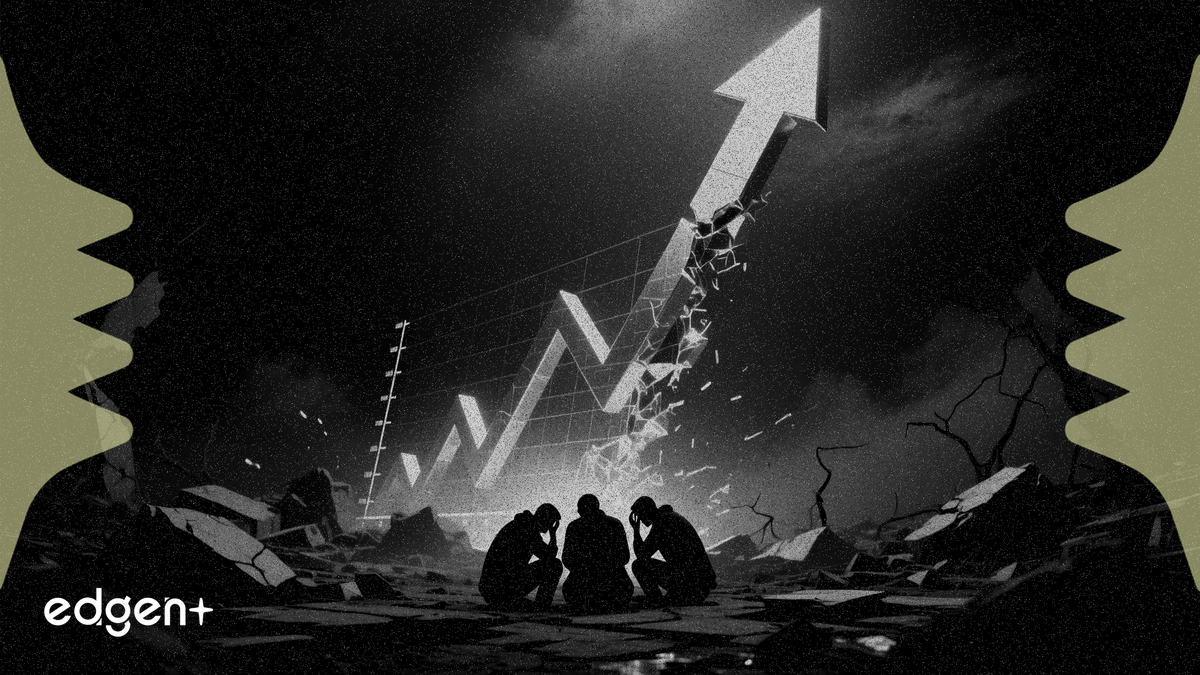
The U.S. stock market is partying like it's 1999, but for the average American, sentiment is the worst it has been in 70 years.
A historic divergence is splitting the U.S. economy, with equity markets hitting record highs on the back of strong corporate earnings while consumer sentiment craters to its lowest level in 70 years, raising questions about the rally's sustainability.
"Inflation can be lower, growth stronger, real take-home pay higher, and America can be more prosperous," Kevin Warsh, the new Federal Reserve chair, said upon taking his oath of office Friday, acknowledging the immense pressure on the central bank.
The S&P 500 is on track for an eighth consecutive weekly gain, its longest winning streak since 2023, with the Dow Jones Industrial Average closing above 50,000 for the first time. In contrast, the University of Michigan’s final May consumer sentiment index fell to 44.8, a record low, as consumers’ long-term inflation expectations rose to 3.9 percent.
The disconnect presents a critical challenge for the new Fed leadership, which must now navigate persistent inflation and widespread economic gloom without extinguishing a powerful, AI-driven market boom. The path forward likely involves a delicate balancing act on interest rates, with Governor Christopher Waller signaling the next move could be a hike just as easily as a cut.
The market's ascent has been fueled by resilient corporate performance, with S&P 500 earnings growth topping 20 percent year-over-year, according to Russell Investments. An ongoing wave of enthusiasm for artificial intelligence has also lifted technology stocks, with Dell Technologies surging 17 percent and HP up 14 percent on Friday amid strong AI-related demand forecasts. Investor optimism is further supported by signs of de-escalation in the Middle East, with reports of progress in US-Iran peace talks.
Wealth Gap Fuels Consumer Anxiety
The optimism on Wall Street stands in stark contrast to the mood on Main Street. The record-low sentiment reflects broad anxieties over the cost of living, with high energy prices a primary concern as Brent crude remains above $100 a barrel. The divergence is also symptomatic of what some analysts call the "biggest wealth divide in modern history," where the benefits of the asset price rally are concentrated among the wealthiest households, leaving many others feeling left behind.
New Fed Chair Faces Inflation Test
Assuming leadership amidst this divergence, Chairman Warsh inherits a complex economic picture. Inflation has shown signs of reaccelerating, driven in part by war-related energy shocks. Warsh, who has promised a "reform-oriented" Federal Reserve, now faces the difficult task of fulfilling his pledge for lower inflation and higher real wages while the market prices in a different reality. His first moves will be closely watched for signals on the central bank's tolerance for the current market froth.
This article is for informational purposes only and does not constitute investment advice.