Four years into a war that has already outlasted World War I, Ukraine's front-line troops are showing no signs of breaking — and early signs of a tactical shift against Moscow are beginning to emerge.
LOZOVA, Ukraine — Jr. Lt. Ihor Vizirenko has been fighting since the weeks after Russia's 2022 invasion. The 34-year-old infantry officer bears the physical scars: a facial tic from multiple concussions, a limp from back problems, and the psychological weight of 10 dead friends. He sees his 3-year-old daughter, born after the war started, twice a year for 15-day leaves. Yet he remains on the battlefield, part of a core of hardened soldiers that has sustained Ukraine's defense through more than four years of combat.
"His name was Denys, and we found a common language as soon as we met," said a fellow soldier with the call sign Khersonets, recalling the first of more than 100 comrades he has lost since he enlisted in 2014. "I just think about him a lot."
The resilience of Ukraine's troops is starting to pay off. Russia's territorial gains have evaporated in recent months, and its casualties have mounted. Ukraine has struck deep inside Russian territory, including a massive aerial assault that crippled the Moscow region's biggest oil refinery. On Vizirenko's section of the front line near Lyman, Ukrainian forces are using drones at higher volumes to deadly effect. "I believe this is only the beginning of a hellish summer for the Russians — one they'll remember," he said.
The stakes extend beyond the battlefield. A Kyiv International Institute of Sociology poll conducted in April found that 57% of Ukrainians reject Russian demands to cede control of the eastern Donbas region. Among soldiers, opposition is even stronger at 59%. That resolve persists despite acute recruitment challenges: Ukraine's Defense Minister Mykhailo Fedorov told parliament in January that roughly 200,000 soldiers are listed as absent without leave.
The Human Cost of Attrition
Vizirenko's unit from the 21st Mechanized Brigade has seen some of the war's most brutal fighting. For almost a year, they held the strategically important city of Chasiv Yar in eastern Ukraine, repelling waves of Russian attacks sometimes as close as a dozen yards before withdrawing last year. They now hold a line about 40 miles north near Lyman, where they have fought Russia to a standstill.
The psychological toll is evident. Vizirenko suffered two concussions from artillery shelling; the second left him unable to speak, requiring hospitalization in Dnipro and rehabilitation in western Ukraine. His wife, Yuliia, described a period when he stopped answering his phone. When he finally did, he was crying — something she had heard only once before, when his eldest daughter was born. "Sometimes he just sits and stares into space," she said. "I talk to him and he doesn't even hear me, he's lost."
Despite his injuries, Vizirenko has not sought a medical discharge. "My position is simple: I'm tired, but we have to finish this," he said.
The Innovation Edge
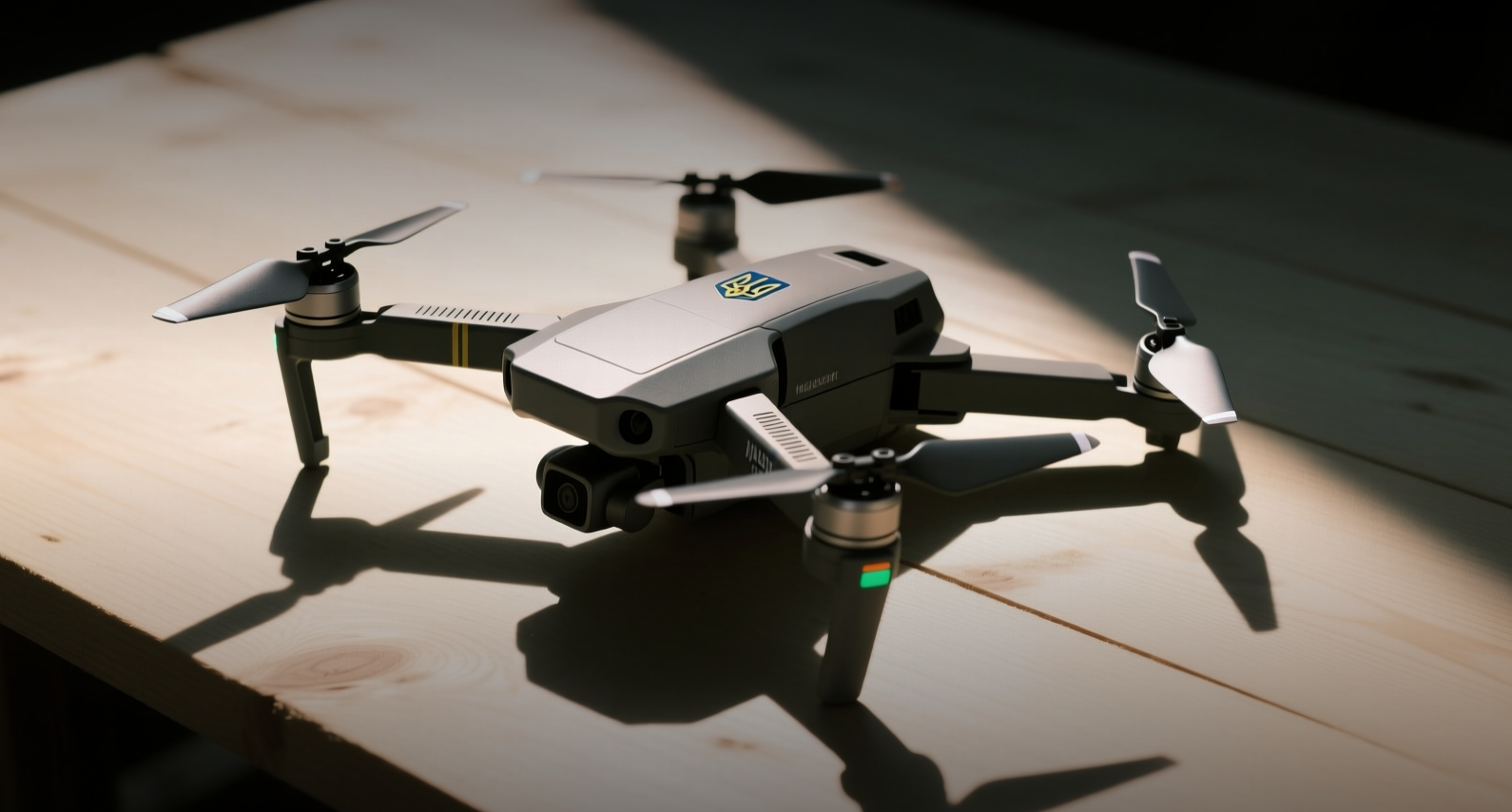
The war has also become a laboratory for battlefield adaptation. Ukraine's drone industry has expanded at a remarkable pace, with independent estimates suggesting the country manufactured roughly 4 million drones in 2025 and could produce 5 million to 6 million in 2026, according to the Kyiv Post. President Volodymyr Zelensky has set a target of about 10 million drones in 2026, and Ukrainian officials say capacity could eventually reach 20 million with additional investment.
The lesson extends beyond hardware. Bryan Pickens, a former U.S. Army Green Beret who fought alongside Ukrainian special operations forces, argued that Ukraine is ahead of the U.S. in integrating modern technology into a complete approach to warfare. "From strategic to tactical levels, they are innovating doctrinally and technologically faster than anyone in the world," he said.
For the soldiers on the front line, the end remains distant but imaginable. One comrade, a sergeant with the call sign Welder, bought a countryside property near Poltava for after the war. Manunya, a junior sergeant who has tattooed up to 100 soldiers in the brigade, wants to open a tattoo parlor. Vizirenko said all he wants is to take his daughters and wife into a forest and hear the birds sing.
This article is for informational purposes only and does not constitute investment advice.