
Kyiv is restructuring its army to fight with machines, ordering a production surge of unmanned ground vehicles to replace soldiers in the most dangerous roles on the front line.
Kyiv is restructuring its army to fight with machines, ordering a production surge of unmanned ground vehicles to replace soldiers in the most dangerous roles on the front line.
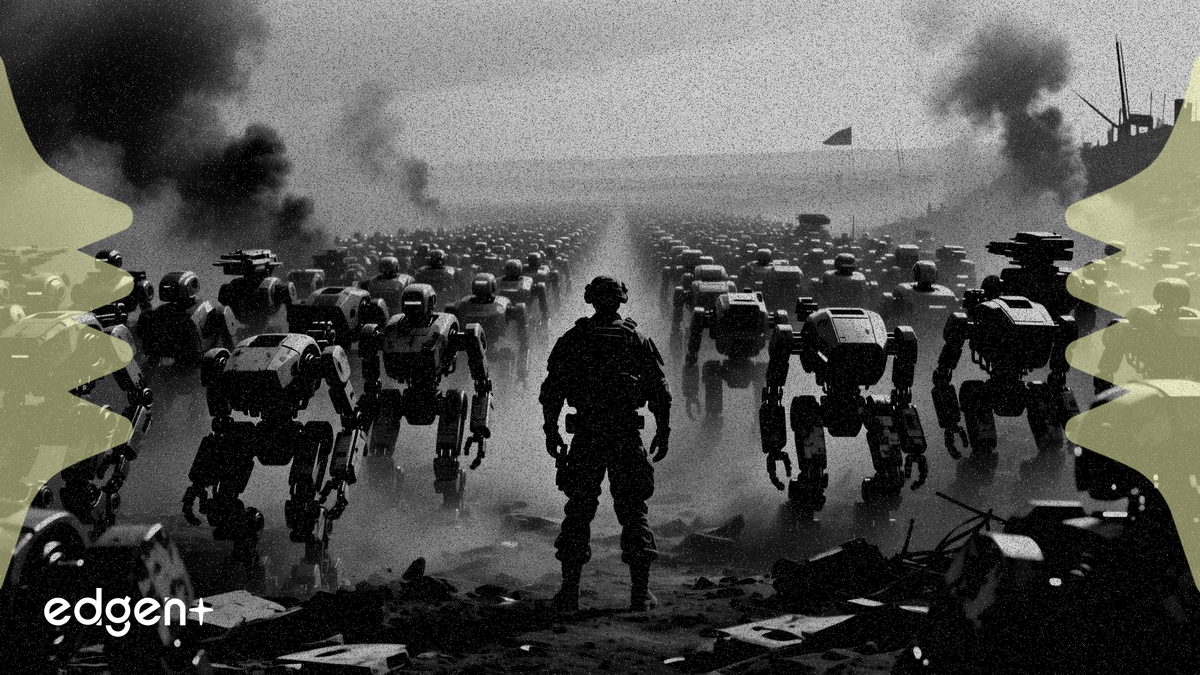
Ukraine’s military will integrate 50,000 unmanned ground vehicles (UGVs) into its force structure this year under a new presidential directive, signaling a major shift to robotic warfare to reduce human casualties along the 1,000-kilometer front.
"We are actively looking for ways to provide... [and] have tasked the Defense Ministry and General Staff with delivering at least 50,000 unmanned ground vehicles this year," President Volodymyr Zelenskyy said in a May 2026 address, confirming the strategic pivot.
The Ministry of Defence, in a separate announcement, confirmed it is forming dedicated robotic units within combat brigades to operate the new platforms. Field testing for several UGV models, including the domestically produced Ratel family, has been underway since summer 2024 across four mission categories: logistics, fire support, engineering, and casualty evacuation.
For an army facing persistent manpower pressure, substituting expendable machines for trained soldiers in high-attrition tasks like trench assaults and medical rescues is an existential trade-off. The 50,000-unit target suggests Kyiv is betting it can replicate its FPV drone production success, a move that could fundamentally alter the calculus of the ground war if Russia fails to develop effective countermeasures.
Kyiv’s ambitious 50,000-unit goal hinges on its ability to replicate the rapid, decentralized production model that allowed it to scale FPV aerial drone manufacturing from near zero in 2023 to hundreds of thousands per year by 2025. The Ministry of Defence’s disclosure that UGV field trials have been running for nearly two years suggests that multiple platforms have reached a level of maturity to justify this industrial bet.
However, ground robots present more complex manufacturing and logistical challenges than small aerial drones. UGVs require heavier components, more sophisticated navigation software to handle difficult terrain, and more robust communication links to be effective. While Ukraine's defense industry has proven resilient, the gap between a presidential directive and mass delivery remains a significant variable. Russia, which has its own UGV development programs, is certain to deploy electronic warfare and other countermeasures to disrupt their deployment.
The decision to embed robotic units directly into combat brigades marks a critical step from ad-hoc experimentation to doctrinal integration. This organizational shift ensures that UGV operators and infantry will train and fight within the same command structure, a prerequisite for developing the complex tactics of combined human-machine assaults.
Ukrainian forces have already demonstrated sophisticated coordination between infantry and aerial drones. The new structure creates the conditions to pair UGVs with FPV drones, where a ground robot could push forward to draw fire while an aerial drone strikes the exposed enemy position. While official sources do not yet document specific instances of such coordinated attacks, the doctrinal intent is clear: use machines to absorb risk.
The ultimate success of the program will be measured in battlefield data that has not yet been released: casualty trends in brigades using UGVs, the success rate of robotic logistics runs, and the number of fortified positions taken without loss of life. What is clear is that Ukraine has committed to a robotic solution for its attrition problem, a decision that will reshape its ground forces for years to come.
This article is for informational purposes only and does not constitute investment advice.
