


President Trump's June 22 executive orders designate quantum computing as a national strategic priority, directing federal resources toward commercialization and deployment.
President Trump's June 22 executive orders designate quantum computing as a national strategic priority, directing federal resources toward commercialization and deployment.
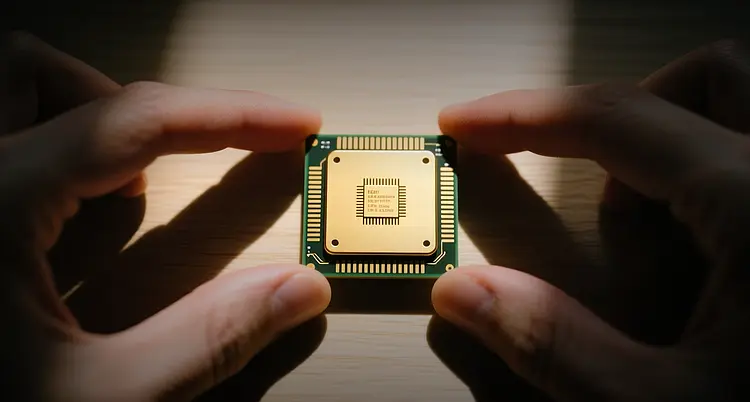
President Trump signed two executive orders June 22 elevating quantum computing from a long-term research initiative to a national strategic priority, directing the White House to update the National Quantum Strategy within 180 days.
"The revised strategy will prioritize domestic manufacturing, workforce development, public-private partnerships and the commercialization of quantum technologies," the White House said in a statement accompanying the orders, which also establish the Quantum Computer for Application Development and Discovery Science initiative at the Department of Energy.
A companion executive order accelerates the federal transition to post-quantum cryptography, reflecting efforts to strengthen cybersecurity against future quantum-enabled threats. The orders build on earlier U.S. quantum initiatives, including the CHIPS and Science Act, under which D-Wave Quantum Inc. signed a letter of intent for $100 million in proposed funding in May. D-Wave also secured a $1.5 million grant under the National Science Foundation's National Quantum Virtual Laboratory program.
The policy shift shows that quantum computing is increasingly treated as a strategic technology with implications for economic competitiveness, cybersecurity and defense. The updated National Quantum Strategy and the DOE's QC-ADDS initiative could support demand across the quantum value chain, including quantum hardware, advanced semiconductors, photonics, cryogenic systems and quantum software. While broad commercial adoption of fault-tolerant quantum computing remains years away, the executive orders suggest federal procurement and strategic investment will play a larger role in shaping the industry's growth trajectory.
The investment implications extend beyond pure-play quantum developers. Companies such as International Business Machines Corp., Quantum Computing Inc. and D-Wave Quantum stand to benefit from growing federal support for the quantum ecosystem. IBM recently introduced the world's first sub-1 nanometer chip technology, featuring a breakthrough transistor architecture at the 0.7 nanometer node, packing nearly 100 billion transistors onto a chip the size of a fingernail. D-Wave is advancing both annealing and gate-model quantum computing systems, with its dual-rail technology developed through the acquisition of Quantum Circuits Inc., a Yale University startup.
The push to accelerate the federal transition to post-quantum cryptography could create opportunities for cybersecurity vendors serving government and regulated industries. IonQ, another quantum computing company, recently unveiled its Clavis XG Multiplex product line designed to make quantum security more practical across metropolitan fiber networks, and opened a new laboratory suite in Boulder, Colorado, to support quantum computing research and semiconductor chip testing.
The administration's approach mirrors a broader pattern of government equity involvement in strategic technologies. The government obtained a 10% stake in Intel Corp. after investing $8.9 billion in the American chipmaker's stock, and has also taken equity stakes in IBM and other quantum-computing companies. The previous U.S. quantum initiative, the National Quantum Initiative Act of 2018, authorized $1.2 billion over five years for quantum research, a fraction of what the current executive orders could unlock through the CHIPS Act and DOE programs.
The executive orders also direct the development of a large-scale quantum computer for scientific discovery through the QC-ADDS initiative, positioning the Department of Energy as a central player in quantum hardware deployment. This marks a shift from the previous administration's focus on basic research toward a more commercially oriented approach that emphasizes domestic manufacturing and public-private partnerships.
This article is for informational purposes only and does not constitute investment advice.
