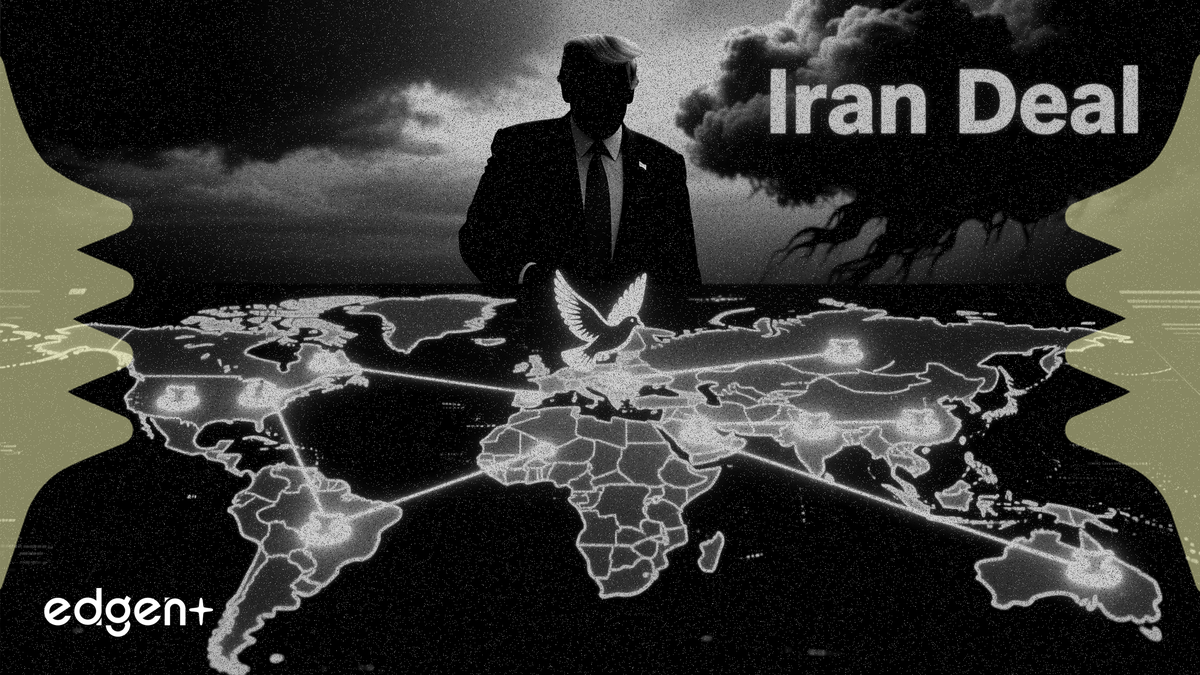
Donald Trump has issued a stark ultimatum to the Middle East: normalize relations with Israel or face the consequences of a collapsed Iran deal, a move that injects significant new volatility into the region.
Former US President Donald Trump on May 25 demanded at least seven Middle Eastern nations, including Saudi Arabia and Qatar, normalize relations with Israel, explicitly tying the move to the success of ongoing US-Iran negotiations and threatening military action if talks fail. The statement, made on social media, dramatically raises the stakes for the ongoing diplomatic balancing act in one of the world's most critical energy corridors.
"All of these countries must at least simultaneously sign the Abraham Accords," Trump said, referencing calls he claimed to have had with leaders from Saudi Arabia, the UAE, Qatar, Turkey, Egypt, Jordan, and Bahrain, as well as Pakistan's army chief. He added that while "one or two countries might have a reason not to, which is acceptable... most should be ready."
The demand directly targets major regional powers like Saudi Arabia and Qatar, which have not yet established formal diplomatic ties with Israel. The ultimatum links two of the region's most sensitive diplomatic tracks: the US-led effort to contain Iran's nuclear program and the Israeli-Arab normalization process. A failure in the Iran talks, Trump warned, would lead to a strike "larger and more powerful than before."
The statement injects a new layer of uncertainty into global energy markets, as heightened geopolitical risk in the Middle East could drive crude oil prices above their current levels near $80 per barrel for Brent. For investors, this translates to a potential flight to safety, possibly benefiting assets like gold and the US dollar while increasing volatility for equities and potentially benefiting defense-related stocks.
A New Condition for Iran Diplomacy
Trump's declaration effectively seeks to merge two of his signature foreign policy initiatives. The Abraham Accords, brokered by his administration in 2020, saw the UAE, Bahrain, Morocco, and Sudan normalize relations with Israel. His new demand would significantly expand that circle, pressuring countries that have historically been more cautious in their approach to Israel, often citing the Palestinian issue as a precondition.
The list of countries mentioned is notable. While the UAE and Bahrain are already signatories, the inclusion of Saudi Arabia is the most significant prize. The Kingdom has maintained that a path to a Palestinian state is necessary before it will formally recognize Israel. Qatar, a key mediator in various regional conflicts, and Pakistan, a major non-Arab Muslim nation, have also held back. Trump's post specifically called for "Saudi Arabia and Qatar to sign immediately," with others to follow.
By making this a condition for a "great deal" with Iran, Trump is creating a complex geopolitical equation. It forces regional actors to weigh their relationship with Israel against the potential for either a renewed diplomatic engagement with Iran or a major military conflict.
Markets Brace for Heightened Volatility
The immediate market impact of political statements can be fleeting, but Trump's ultimatum sets a new baseline for risk in the Middle East. The Strait of Hormuz, a critical chokepoint through which about 21 percent of global petroleum liquids consumption passes, is bordered by Iran and Oman. Any hint of military conflict in the region typically adds a risk premium to oil prices. The last major escalation in mid-2019 saw Brent crude futures jump by over 10 percent in a matter of days.
Analysts will be watching for signs of this tension being priced into the market. This could manifest as a steepening of the oil futures curve, a rise in the CBOE Volatility Index (VIX), or a widening of credit default swaps for regional sovereigns. The statement could also drive a flight to traditional safe-haven assets. Gold, which often rallies on geopolitical uncertainty, could see renewed buying interest, as could the US dollar.
Conversely, equity markets, already navigating a complex macroeconomic environment, would face another headwind. Increased energy costs could exacerbate inflationary pressures, while the general uncertainty could dampen investor sentiment and corporate investment in the region and beyond. Defense sector stocks, however, could see a bid as investors price in a higher probability of conflict.
This article is for informational purposes only and does not constitute investment advice.