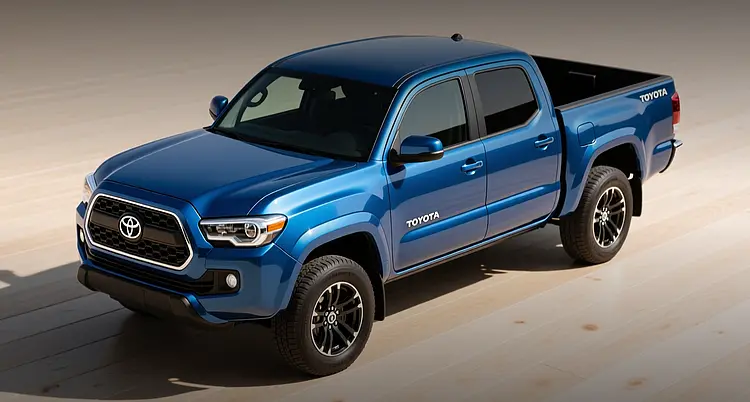
Toyota Motor Corp will spend $3.6 billion to expand its San Antonio plant and move production of the Tacoma pickup truck from Mexico back to the United States, the latest example of automotive manufacturing shifting north of the border amid trade policy uncertainty.
The expansion, announced Monday, adds 2.5 million square feet of factory space and 2,000 jobs to Toyota's South Side campus, where it already builds the Tundra and Sequoia models. The Tacoma line will relocate from Toyota's Baja California plant in Mexico over a four-year period, reversing a 2021 decision to move production there.
"By expanding our San Antonio plant, we are deepening our commitment to American manufacturing, creating meaningful and sustainable jobs," Ted Ogawa, Toyota's North American president and CEO, said in a statement.
The investment is part of a $10 billion commitment to U.S. manufacturing that Toyota announced last year. The company estimated its total San Antonio investment will reach $8.3 billion after the new assembly line is completed by 2030. Construction begins this year.
State and local governments assembled an incentive package worth at least $303 million to secure the project, code-named Project Orca. The city of San Antonio contributed $102 million through grants, infrastructure funding and an $88 million, 10-year tax abatement. Bexar County added $55.5 million in grants and tax abatements, while the state of Texas chipped in $42.7 million. The San Antonio Water System and CPS Energy contributed $63.2 million in infrastructure support and energy savings. An additional $40 million to $60 million in roadwork connecting the plant to U.S. Highway 281 is also under consideration.
The tax abatements — $186 million of the total package — exempt Toyota from property taxes for a decade. Over the 10-year period, the incentives amount to more than $150,000 per job created for the new assembly line.
Toyota must pay workers at least $32.46 an hour — Bexar County's average annual wage — as part of its agreement with the city. The company also must use 10% of its tax abatement savings for worker training, transportation or child care.
The decision to move Tacoma production back to the U.S. comes as automakers reassess cross-border supply chains. Toyota's previous Tacoma production shift to Mexico in 2021 had drawn scrutiny amid broader trade policy debates. The company said other sites were considered for the expansion but did not disclose which locations competed for Project Orca. Bexar County officials have asked Texas Attorney General Ken Paxton to block public records requests about the negotiations, citing state laws protecting business development discussions.
Toyota's expansion follows a pattern of automotive investment in the U.S. South. The company first built its San Antonio plant in 2003 with a $1.3 billion investment, and has since expanded in 2010 and 2019. A $531 million rear axle plant, supported by $30 million in incentives, is set to begin production later this year. By comparison, other manufacturers that located on San Antonio's South Side received far smaller packages — JCB and Navistar each got incentives valued at around $30 million.
The $3.6 billion commitment shows Toyota sees the U.S. pickup truck market as a long-term growth driver, even as the broader auto industry navigates the transition to electric vehicles. The Tacoma is one of Toyota's best-selling models in North America, and domestic production insulates the company from potential tariff exposure on vehicles assembled in Mexico.
This article is for informational purposes only and does not constitute investment advice.