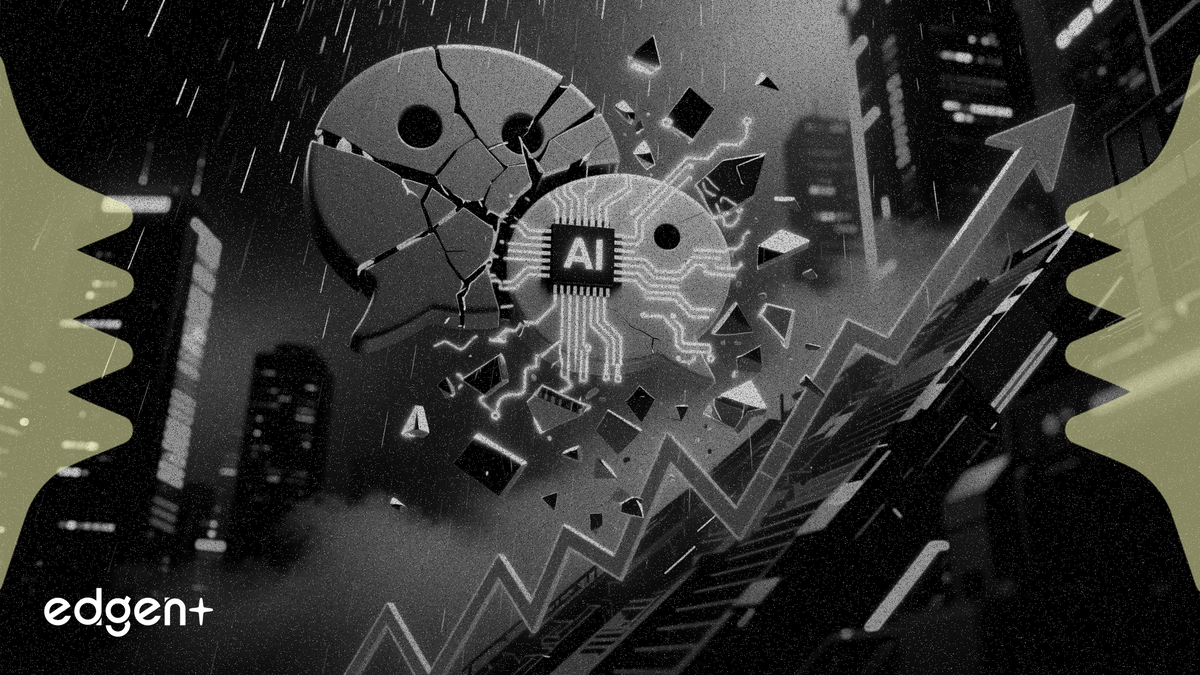
Tencent's plan to embed an AI agent into WeChat, China's most-used app with more than 1 billion users, is hitting infrastructure snags that could delay its rollout.
Tencent Holdings Ltd. is facing delays in launching AI agents for WeChat as US chip restrictions and tight domestic supply limit the computing power needed to support the product, according to BNP Paribas.
"The importance of a successful launch could lead to prolonged testing delaying a rollout," the BNP Paribas analysts wrote, maintaining an Outperform rating with a HKD750 price target. "Affected by US restrictions and tight domestic supply, Tencent is hitting an impasse in securing sufficient computing power."
Tencent is testing a prototype and plans to initiate compliance procedures as early as this month, with a phased rollout to a small group of users before wider release. The exact public launch date remains unconfirmed. The stock fell 3.7% on the day, after declining about 25% year-to-date as broader market concerns over AI monetization weighed on sentiment. Short selling reached HK$1.78 billion, or 12.3% of turnover.
The delays highlight a structural challenge for China's AI ambitions: even the country's most valuable technology company, with a super-app processing trillions of renminbi in annual GMV through Mini Programs, cannot bypass the hardware bottleneck created by US export controls on advanced chips. The rollout could entail enormous spending on computing resources, and it remains unclear whether Tencent can generate enough revenue in the short term to cover these costs, BNP Paribas said.
The Compute Conundrum
Tencent's Hunyuan model, which underpins the planned agent, requires substantial inference capacity at scale. BofA Securities estimates a public launch would boost Tencent's capital expenditure outlook for 2026 through 2028. The bank maintained a Buy rating with a HKD780 target, calling the AI agent a clear re-rating catalyst.
The compute shortage reflects a broader industry reality. Domestic accelerator supply is stabilizing but remains constrained, while US export controls limit access to Nvidia's most advanced chips. Chinese AI companies have turned to optimized inference stacks and on-device acceleration to reduce cloud load, but a full-scale WeChat deployment serving more than 1 billion monthly active users presents a different order of magnitude.
Distribution vs. Model Accuracy
The WeChat AI agent represents a bet that distribution trumps model accuracy. Rather than competing on benchmark scores, Tencent is converting its existing infrastructure — identity, payments, messaging, mini programs and video accounts — into an agent-driven operating system. Mini Programs alone surpassed RMB 3 trillion in annual GMV in 2023, providing a ready-made commerce surface.
Baidu Inc. and Alibaba Group Holding Ltd. are pursuing similar strategies with their ERNIE and Qwen models, embedding AI into search, enterprise tools and cloud services. Meituan, with billions of annual on-demand orders, is expanding AI routing and merchant assistants. The competitive field is shifting from model performance to real-world execution.
Tencent shares trade at roughly 10 times estimated 2027 earnings, a discount reflecting market skepticism about AI monetization timelines. A successful WeChat AI agent launch could drive valuation re-rating, BNP Paribas said, but the compute bottleneck means investors may need to wait longer than expected for the catalyst to materialize.
This article is for informational purposes only and does not constitute investment advice.