
SpaceX's plan to orbit 1 million AI satellites threatens to upend the $300 billion cloud computing oligopoly.
SpaceX's plan to orbit 1 million AI satellites threatens to upend the $300 billion cloud computing oligopoly.
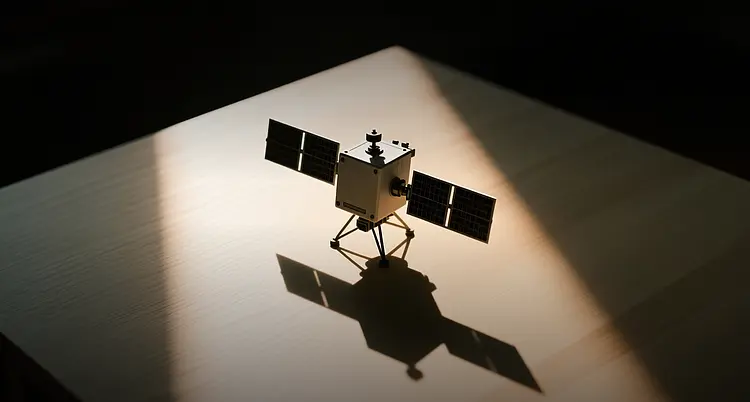
Elon Musk's SpaceX confirmed plans for Starmind, a constellation of as many as 1 million satellites designed to run artificial intelligence workloads in orbit, directly challenging the terrestrial data centers that power Amazon, Microsoft and Alphabet's cloud businesses.
"The idea is for the satellites to process their data in space, then beam the results back to Earth," Musk said on X, describing a system that bypasses the power and cooling constraints that limit Earth-based AI data centers.
Starmind's satellites will run on solar power — "It's always sunny in space," Musk has said — and radiate heat directly into the vacuum, eliminating the need for the massive cooling systems that consume as much as 40 percent of a typical data center's electricity. The constellation would be roughly 100 times the size of SpaceX's existing Starlink network, which operates about 10,000 satellites. SpaceX's reusable Starship, designed to lower launch costs, would be critical to making the economics work.
If successful, Starmind could disrupt the three hyperscalers that dominate AI cloud computing — AWS, Microsoft Azure and Google Cloud — which together generated more than $300 billion in combined cloud revenue last year. Amazon, Microsoft and Alphabet are unlikely to cede the market without a fight. Amazon could counter through its Project Kuiper satellite business and its relationship with Blue Origin, the rocket company founded by executive chairman Jeff Bezos.
The Hyperscaler Threat
The cloud giants have spent hundreds of billions building data centers across the globe, only to face two constraints that Starmind would bypass entirely. Earth-based AI data centers require enormous amounts of electricity — a single large language model training run can consume as much power as thousands of homes use in a year — and generate heat that requires energy-intensive liquid cooling systems. Starmind's orbital approach eliminates both problems at once.
But the technological and regulatory hurdles are immense. SpaceX would need to launch more satellites than have been launched in all of human history combined. Each satellite would need onboard AI processors capable of running inference workloads in the radiation-heavy environment of low-Earth orbit, a challenge no company has solved at scale. Musk has a track record of ambitious predictions that missed their deadlines — full self-driving autonomy for Tesla vehicles remains unrealized years after his initial forecasts.
What It Means for Investors
For investors, the Starmind announcement introduces a new variable into the cloud computing investment thesis. The three hyperscalers trade at a premium to the broader market — Microsoft at 35 times forward earnings, Amazon at 44 times and Alphabet at 24 times — in part because of the growth expectations baked into their AI cloud businesses. A credible orbital alternative could compress those multiples over time, even if Starmind is years from commercial viability.
Prediction markets have already begun pricing in the risk. The probability of Alphabet holding its position as the world's second-largest company by market capitalization on July 31, 2026, has declined, according to Vera data, as traders weigh the potential disruption from space-based computing.
Amazon, for its part, has options. Its Project Kuiper satellite internet business could be adapted for edge computing workloads, and Blue Origin's New Glenn rocket could provide a competing launch platform. The three tech giants could also become SpaceX customers themselves, leasing orbital compute capacity rather than building their own constellations.
"Amazon, Microsoft and Alphabet won't simply allow their fastest-growing businesses to go away without a fight," said Keith Speights, an analyst at The Motley Fool. The three companies could become SpaceX customers, he added, or Amazon could leverage its Leo satellite business to compete more effectively.
For now, Starmind remains a speculative bet on Musk's ability to execute on his most ambitious vision yet. But the direction of travel is clear: the next frontier of cloud computing may not be on Earth at all.
This article is for informational purposes only and does not constitute investment advice.