
Key Takeaways:
- SpaceX rebranded xAI to SpaceXAI with a new logo on July 6
- AI CapEx hit $12.7 billion in 2025, triple space and Starlink spending
- Anthropic and Google committed $2.17 billion monthly for Colossus compute
Key Takeaways:
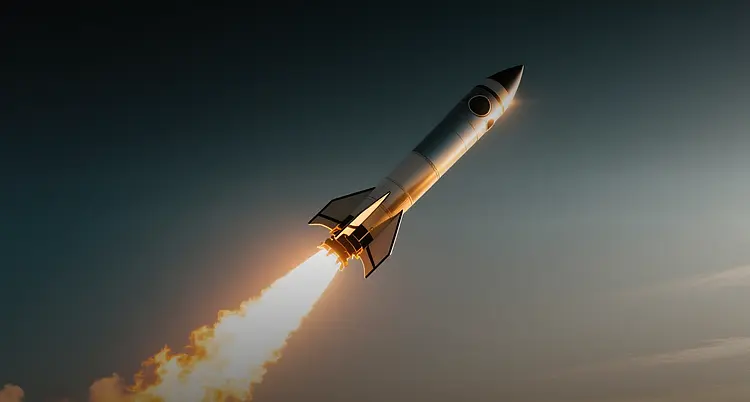
SpaceX has completed the rebranding of its AI division to SpaceXAI, folding the former xAI into a unified corporate structure after the largest IPO in history.
SpaceX completed its xAI rebrand to SpaceXAI on Monday, integrating the chatbot and compute business into the rocket company after a $75 billion IPO that valued the combined entity at $1.77 trillion. The new logo, unveiled on the company's X account, replaces the xAI branding with a design that incorporates SpaceX's signature rocket motif.
"SpaceXAI represents the full convergence of our space and AI capabilities," the company said in a social media post. "Compute in orbit is the next frontier."
The rebrand follows SpaceX's February acquisition of xAI — including the Grok chatbot and the X social platform — and its record-setting June IPO. SpaceX's AI capital expenditures reached $12.7 billion in 2025, more than triple what it spent on its space and Starlink connectivity segments combined, according to its IPO filings. The AI unit has been a net loss for the company, but SpaceX described its total addressable market as the largest "in human history."
The AI division has already secured two of the largest compute deals in the industry. Anthropic agreed to pay $1.25 billion a month for access to SpaceX's Colossus data centers, while Google committed $920 million a month. Those two contracts alone represent $2.17 billion in monthly recurring revenue, a scale that rivals the largest cloud infrastructure agreements at Amazon Web Services and Microsoft Azure.
Compute in Orbit
SpaceX plans to deploy "AI compute satellites" — data centers in space — as early as 2028, a timeline that would give it a first-mover advantage in space-based AI infrastructure. The company's Starlink satellite network, with more than 7,000 satellites in low-Earth orbit, provides the communications backbone for such an effort. The orbital data centers would bypass terrestrial power constraints and latency issues that limit ground-based AI compute expansion.
The company has also shown investors a prototype of a handheld AI device running its own operating system and powered by Qualcomm's Snapdragon chipset, according to a Wall Street Journal report. The device was described as slimmer than an iPhone. Elon Musk called the report "utterly false" on X without elaborating, though the Journal's sources said the prototype had been physically demonstrated to potential investors.
Investor Implications
SpaceX shares, which surged to $225 in the days after the June 12 IPO before retreating to $162, joined the Nasdaq 100 on July 7. The stock trades at a valuation that reflects both its rocket business and the AI compute opportunity, though the AI segment has yet to turn a profit. Historical precedent for high-profile Nasdaq 100 additions suggests caution: Palantir fell 25% in the weeks after its December 2024 inclusion, and Strategy declined roughly 80% from its pre-inclusion peak.
The competitive landscape is intensifying. Amazon, Microsoft, and Google are collectively spending more than $200 billion annually on AI infrastructure, according to their latest earnings reports. SpaceX's orbital compute strategy differentiates it from terrestrial hyperscalers, but the technology remains unproven at scale. The company's $12.7 billion in AI CapEx in 2025 exceeded the total annual capital spending of most cloud providers a decade ago, underscoring the scale of its bet.
This article is for informational purposes only and does not constitute investment advice.
