The S-1 filing for SpaceX’s historic IPO reveals an empire built as much on financial engineering and high-stakes risk as it is on rockets.
The S-1 filing for SpaceX’s historic IPO reveals an empire built as much on financial engineering and high-stakes risk as it is on rockets.
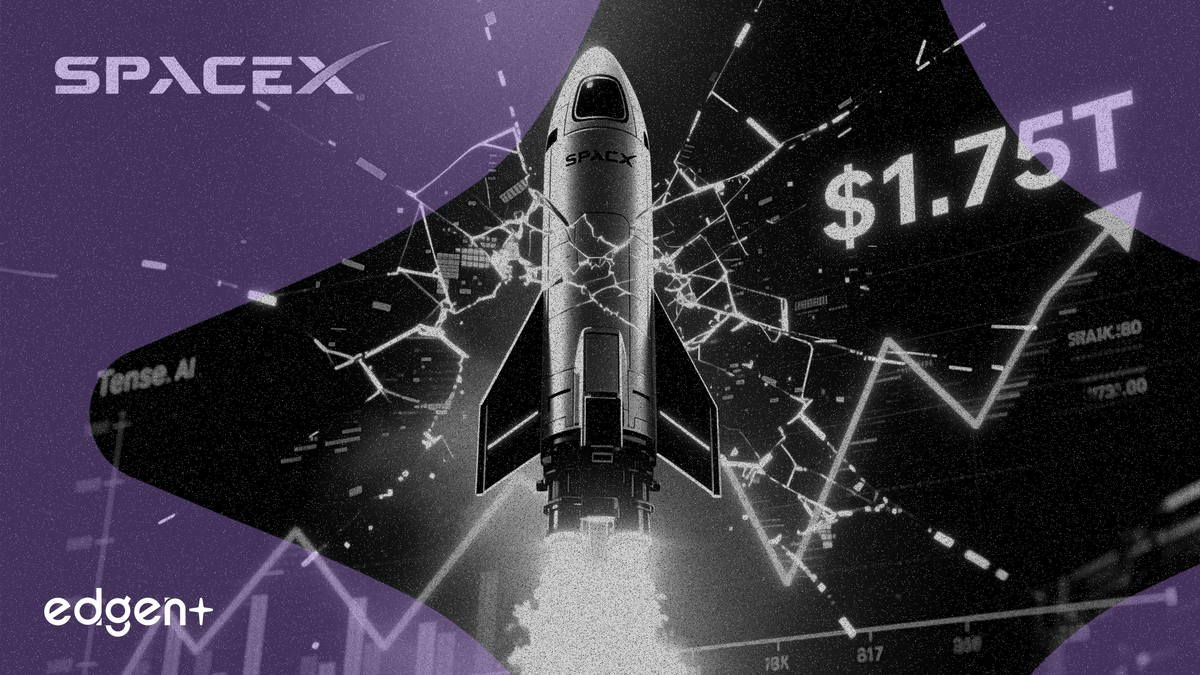
SpaceX’s plan to raise up to $75 billion in a historic IPO exposes its deep reliance on CEO Elon Musk and a complex web of related-party transactions, including using a $20 billion loan to absorb debt from his other ventures. The company is targeting a valuation of $1.75 trillion, asking investors to bet on Musk’s ambitious vision for an integrated rocket-to-AI empire.
The company’s S-1 filing, a mandatory disclosure for the public offering, explicitly states it is “highly dependent” on Musk for its future success. At the same time, the document acknowledges that his leadership of other companies, including Tesla, creates “potential conflicts of interest” and that he is not restricted from competing with SpaceX directly.
The filing details a $20 billion bridge loan arranged by a consortium of banks including Goldman Sachs and Morgan Stanley, which was used to retire $17.5 billion in high-interest junk debt from X and xAI. The move cut annual interest costs to approximately $900 million. The document also reveals that SpaceX lost $4.9 billion on $18 billion in revenue in 2025, with losses accelerating to $4.28 billion in the first quarter of 2026 alone.
For investors weighing the IPO, the filing presents a stark choice: bet on Musk’s proven execution against the backdrop of staggering losses, a rumored low 5 percent public float, and significant governance risks. The valuation hinges not on current profit, but on the belief that Starlink’s cash flow can fund the Starship rocket, which in turn will enable a dominant, yet currently unprofitable, AI business.
The merger with Musk’s xAI venture is central to the IPO narrative, with the S-1 mentioning “xAI” 356 times. The strategic bet is proving costly. SpaceX directed approximately $20 billion, or 60 percent of its capital expenditures, to xAI in 2025. The AI division booked a loss of $2.47 billion in the first quarter of 2026 as capital expenditures tripled to $7.72 billion, eclipsing the other two business segments combined.
The filing acknowledges competition for scarce resources like AI chips among Musk's companies, a direct conflict that has already led to shareholder lawsuits at Tesla. Investors are also being asked to underwrite the risks of Grok, xAI’s “irreverent” chatbot. The S-1 flags “heightened risks” from Grok’s ability to generate explicit or nonconsensual content, citing ongoing investigations and lawsuits in the US and an inquiry from the Irish Data Protection Commission. This positions SpaceX against more cautious rivals like OpenAI and Google.
The IPO documents provide an unprecedented look into the financial plumbing of Musk’s corporate empire. The $20 billion bridge loan, which matures in September 2027, was critical in cleaning up the balance sheet ahead of the listing. It replaced junk debt from Musk’s 2022 acquisition of Twitter (now X) and a subsequent $5 billion debt raise for xAI that carried interest rates as high as 12.5 percent.
Beyond the major refinancing, a network of related-party transactions underscores the interdependence of Musk’s ventures. The filing shows SpaceX purchased $697 million worth of Megapack batteries from Tesla between 2024 and 2025 to support its own data centers. It also procured $1.31 million in Cybertrucks. In turn, Tesla holds a small stake of about 19 million shares in SpaceX, or less than one percent.
For potential shareholders, the key question is whether this integration is a sign of strategic synergy or a critical vulnerability. The S-1 filing makes clear that investing in SpaceX at a near-$2 trillion valuation is not just a bet on space exploration, but a high-stakes wager on the vision and financial engineering of a single individual.
This article is for informational purposes only and does not constitute investment advice.
