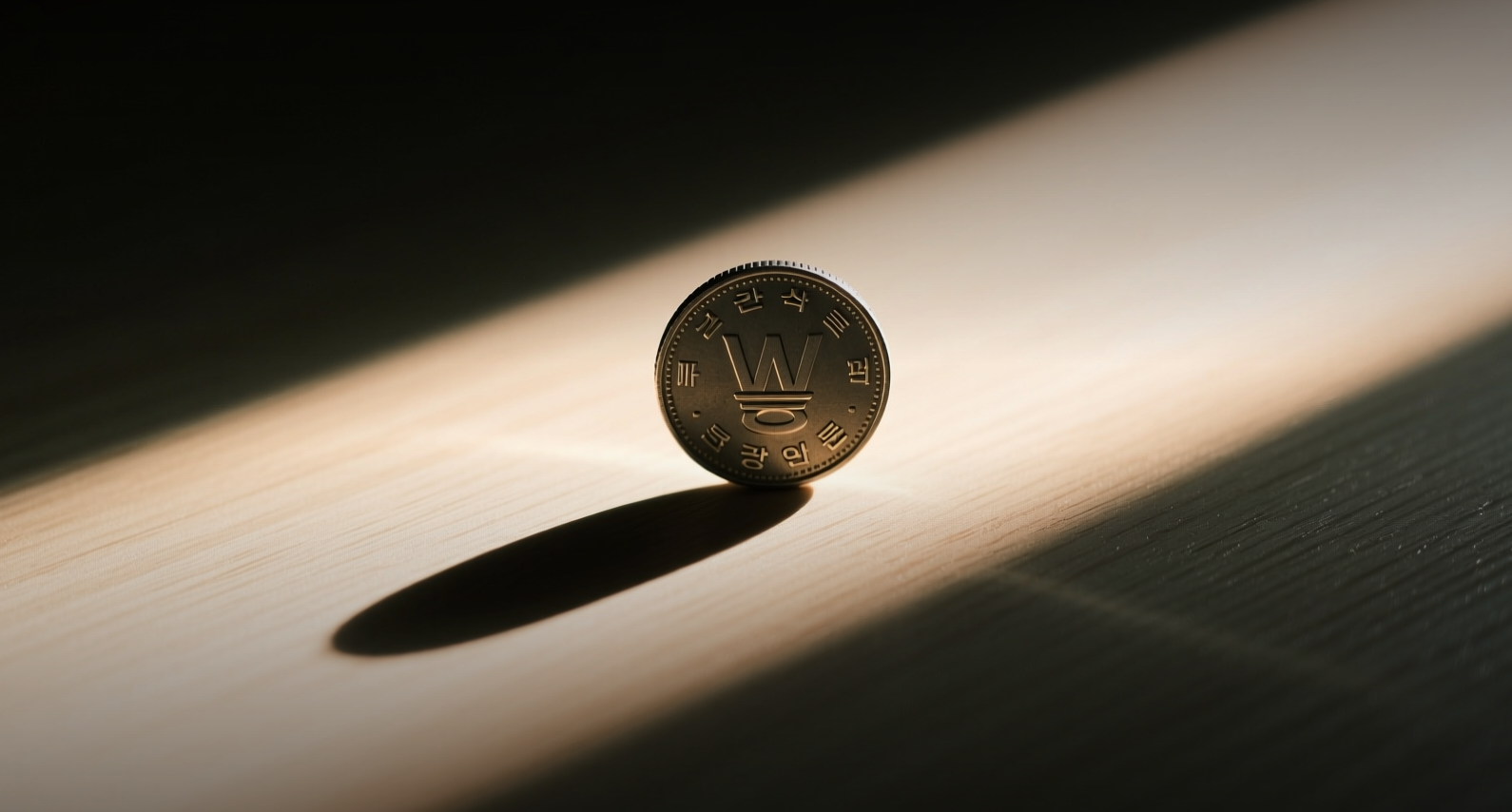
South Korea will open the won to around-the-clock trading from July 6, dismantling currency controls that have been in place since the 1997 Asian Financial Crisis as Seoul pushes for MSCI developed market status — a transition veteran dealers call "daunting" as the currency languishes near a 17-year low.
"When I first came to the market, it was a 9-to-3 game," said Namkoong Taehun, a 47-year-old FX dealer at Hana Bank, South Korea's biggest forex bank by trading volume. "Now the market has expanded exponentially. We are afraid that our workload will increase significantly."
Banks will begin trialling the system from Monday. The reform permits offshore investors to hold and trade the won directly through a new offshore settlement system, replacing a decades-old framework that forced foreign institutions to rely on derivatives contracts for overnight exposure. Roughly 20 percent of spot won volume already takes place during offshore hours, concentrated in the London morning, according to Shen Li, head of FX sales for APAC at State Street Hong Kong.
The stakes are high. MSCI kept South Korea in the emerging market category on Wednesday, citing long-standing accessibility issues and saying onshore liquidity remained insufficient even after the country extended won trading to 2 a.m. two years ago. The next review is a year away. Seoul's broader goal is to eliminate the "Korea Discount" — the tendency for the country's stock market to trade at steep discounts to global peers due to currency curbs, unpredictable policymaking and opaque governance at the dominant chaebol conglomerates.
Liquidity Risks in an Always-On Market
The won's vulnerability is acute. The currency is hovering near levels last seen during the 2008-2009 global financial crisis, pressured by a paradox: the benchmark KOSPI has more than doubled to all-time highs this year on the back of an AI-driven chip rally, but the gains have spurred record selling by overseas funds booking profits and rebalancing portfolios. At the same time, South Korean retail investors continue to pour money into US equities at an unprecedented pace, adding to dollar demand.
A government official in charge of FX policies said the offshore won settlement system will allow foreign financial institutions to "directly hold and utilize the won" for the first time. Previously, tight currency restrictions made doing business slow and costly because of a reliance on non-deliverable forwards to manage won exposure outside Asian trading hours.
The last time South Korea undertook a major FX liberalization — the 2 a.m. trading extension in 2024 — the won initially weakened 3 percent over the following month before stabilizing, according to LSEG data. The current reform goes much further, removing the final barrier to full foreign access.
Banks Staff Up for Round-the-Clock Operations
Lenders are scrambling to prepare. Hana Bank, which runs a three-shift schedule, plans to add three more staff to its 37-member FX trading team. Woori Bank will double the size of its UK-based team to four, while Shinhan Bank will add one person in London and KB Kookmin Bank has added two.
The need for constant monitoring was highlighted recently for 35-year-old Hana Bank dealer Shin Jae-min. "Sometimes it gets intense all of a sudden, like the other day when orders flooded in after SpaceX went public," he said, referring to the June 11 IPO that briefly sent a wave of won demand through the market. "Responding to such demand means no break even during some really odd hours."
The transition comes as South Korea's currency faces a unique set of cross-currents. The KOSPI's world-beating rally — driven by chipmakers SK Hynix and Samsung Electronics, which account for over half the benchmark's market capitalization — has ironically reinforced won weakness. Foreign investors sold a record amount of Korean equities this year to lock in profits, while local investors' Wall Street mania shows no signs of abating.
If the 24-hour system succeeds, it could reshape Asian FX market structure and provide a template for other emerging economies considering similar liberalization. If it fails — through a liquidity-driven crash during thin overnight hours — it would deal a severe blow to Seoul's developed market ambitions and reinforce the very "Korea Discount" the reforms aim to erase.
This article is for informational purposes only and does not constitute investment advice.