

Key Takeaways:
- Rocket Lab won a NASA contract for three Electron launches across two science missions
- Shares rose 5 percent in after-hours trading on the contract announcement
- The TSIS-2 mission will launch just seven months after contract signing
Key Takeaways:
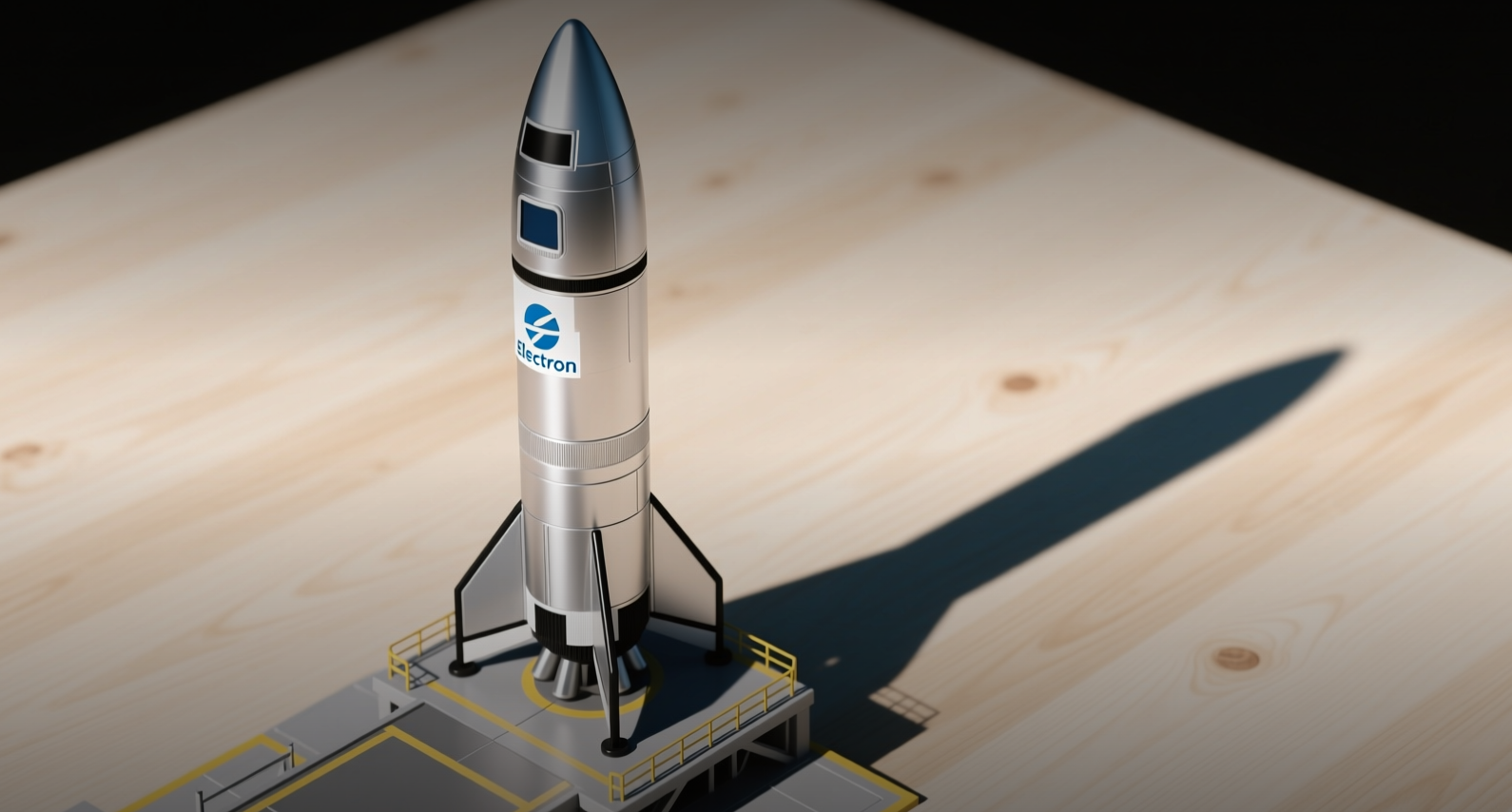
Rocket Lab will launch three Electron rockets for two NASA science missions starting early next year, the company's latest government contract win.
Rocket Lab Corp. won a NASA contract for three Electron rocket launches across two science missions, sending shares up 5 percent in after-hours trading as the company deepens its government business.
"Electron has become synonymous with reliability, precise orbital accuracy, and on-demand launch capability and we've been delivering this for NASA missions for almost a decade," Sir Peter Beck, founder and chief executive officer of Rocket Lab, said.
The contract covers launches for NASA's PolSIR and TSIS-2 missions from Rocket Lab's Launch Complex 1 in New Zealand. Two back-to-back Electron launches for PolSIR, which will deploy a pair of CubeSats to study high-altitude ice clouds in the tropics, are scheduled no earlier than June 2027. A separate launch for TSIS-2, a mission measuring solar irradiance to help predict ozone recovery and air quality, is set for early 2027 — just seven months after contract signing.
The win strengthens Rocket Lab's position as NASA's preferred provider for small satellite launches, with more than 90 Electron flights to date. The company is also developing the larger Neutron rocket for medium-lift missions and has upcoming NASA work including the Aspera astrophysics mission and the LOXSAT in-space refueling demonstration.
Rocket Lab's selection hinged on Electron's deployment accuracy — delivering satellites within meters of their target orbits versus the industry standard of kilometer-level precision, according to the company. The PolSIR mission requires both CubeSats to fly in separate 52-degree inclination orbits to allow scientists to compare ice cloud data across daily, seasonal and annual cycles.
The TSIS-2 mission highlights the growing demand for responsive launch services. NASA booked the launch just seven months before its target date, a timeline that larger providers such as SpaceX often cannot accommodate for small payloads. The mission's measurements of the sun's brightness across ultraviolet, visible and infrared wavelengths will inform Earth system models used for weather forecasting and climate research.
Rocket Lab has secured contracts across defense, NASA and private space markets, diversifying its revenue base. The company's spacecraft and satellite components have supported more than 1,700 missions, including exploration to the Moon, Mars and Venus. Competitors such as Planet Labs and BlackSky are also expanding their government business, with Planet Labs recently securing a 240 million euro German government contract and an eight-figure extension from the U.S. National Geospatial-Intelligence Agency.
Rocket Lab shares, which have gained more than 40 percent this year through Wednesday's close, trade at roughly 12 times projected 2026 sales, according to data compiled by Bloomberg. The NASA contract win provides further validation of the company's small-launch business model at a time when investors are scrutinizing space company valuations.
This article is for informational purposes only and does not constitute investment advice.
