

Oracle has fallen 42% in a month while its cloud infrastructure backlog swelled to $638 billion, creating what Jim Cramer called the contrarian buy of the AI group.
Oracle has fallen 42% in a month while its cloud infrastructure backlog swelled to $638 billion, creating what Jim Cramer called the contrarian buy of the AI group.
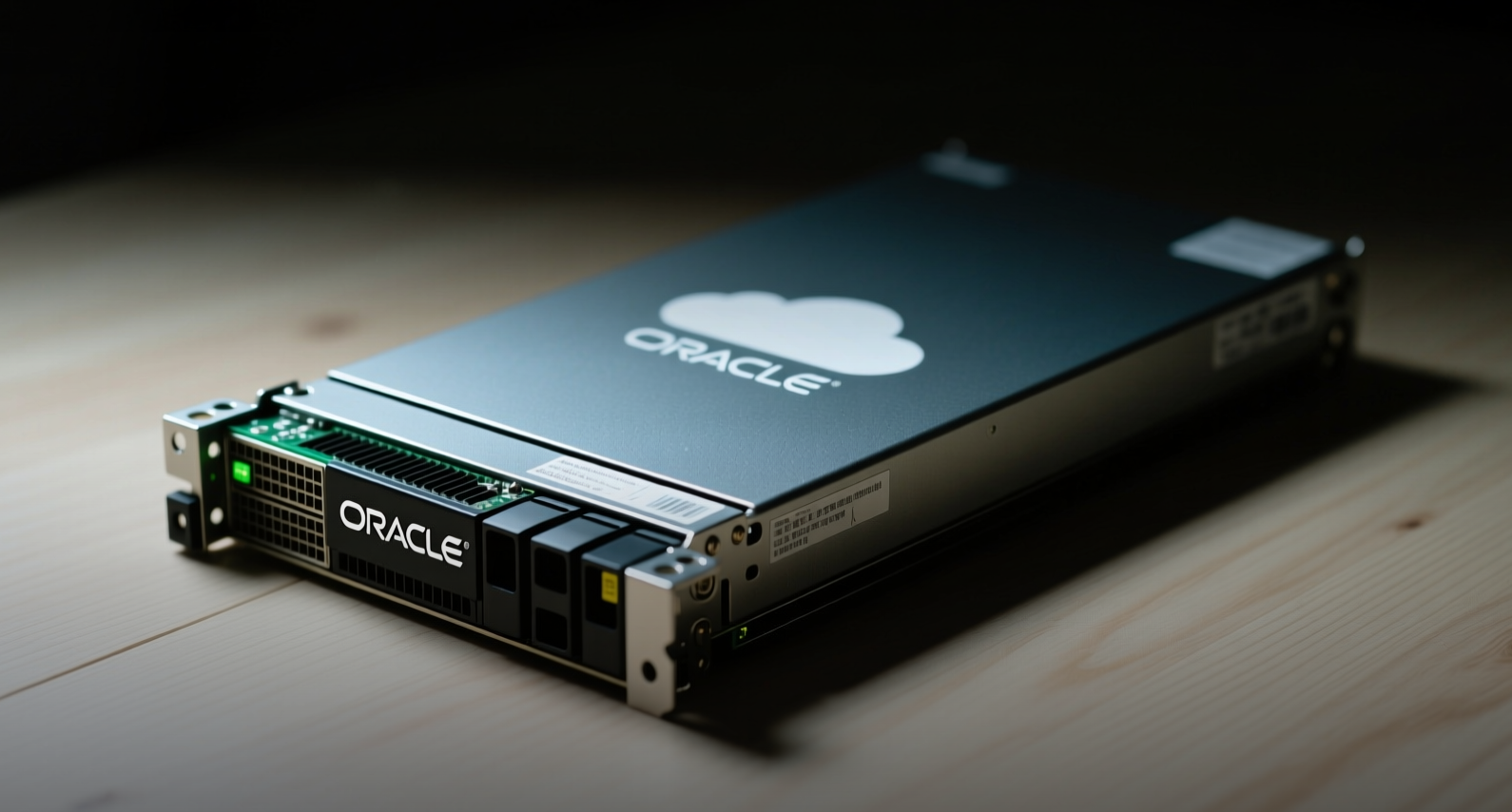
Jim Cramer called Oracle the contrarian buy of the AI group Monday as a tech sector rebound collides with a data center spending boom that has pushed the company's cloud infrastructure backlog to $638 billion.
"Oracle may be the screaming buy of the group," Cramer said on CNBC's Squawk on the Street alongside Carl Quintanilla and David Faber. He framed the session's rally as "revenge of that" Friday selloff, adding that "we're seeing a lot of people who are saying, look, it's time to go back in the group."
Oracle shares traded at $142.50 Monday, down 42.32% from a June 2 close of $244.58. The drawdown masks a business that generated $5.79 billion in cloud infrastructure revenue in Q4 FY2025, up 93% year over year. Remaining performance obligations reached $638 billion, a 363% increase, with $75 billion tied to prepaid or customer-supplied GPU arrangements. Management reaffirmed its FY2027 revenue target of $90 billion and raised its non-GAAP EPS target to $8.05.
The question hanging over the stock is whether the buildout will generate returns commensurate with its cost. The Stargate data center in Saline Township, Michigan, cost $16 billion to construct and another $30 billion to $35 billion from Oracle to equip. Free cash flow was negative $23.7 billion against $55.7 billion in capital expenditures, and the company plans to raise roughly $40 billion through debt and equity in FY2027 to fund expansion. Cramer acknowledged the risk, noting that even skeptical sources have started warming to the setup.
Data Center Economics Face a Reckoning
The broader market is beginning to ask whether massive infrastructure spending will pay off for anyone beyond the model developers. Meta raised its 2026 capex guidance to a range of $125 billion to $145 billion, and Cramer questioned whether the buildout would generate profits across the stack. The concern echoes a theme emerging across Wall Street: token demand is not the same as token pricing power, and the price of AI inference is falling faster than many investors expected.
Goldman Sachs' Delta One desk head Rich Privorotsky has drawn a distinction between scarcity rents and durable competitive advantage. Hyperscalers — Amazon, Alphabet, Microsoft — own the infrastructure, the enterprise relationship, and the balance sheet to absorb pricing pressure. Pure-play compute renters face a more awkward problem as supply expands and models become cheaper. Chinese open-weight models rose from five of OpenRouter's top 50 most-used models in January 2025 to 20 by May 2026, adding another layer of pricing pressure on Western model economics.
Rotation From Hardware to Platform Owners
Tuesday's trading offered a glimpse of how the market is repositioning. Samsung's earnings sent chip stocks lower — Micron fell 4.7% — but investors rotated into megacap names that had lagged for much of the year. Amazon, Alphabet, Meta, Apple, and Nvidia all attracted buyers, along with enterprise software names such as Salesforce, Adobe, and ServiceNow.
"Today it looked like the old days, when we realized that you needed an Nvidia chip to calculate things," Cramer said. He added that the reversal may reflect a growing view that the AI supply chain trade has become crowded while the companies funding the buildout have become more attractive after months of underperformance.
For investors, the divergence between hardware momentum and platform stability is becoming the central question of the AI trade. Oracle trades at roughly 18 times forward earnings based on its raised $8.05 EPS target, a discount to hyperscaler peers that command 25 to 35 times. If the company delivers on its $90 billion revenue target for FY2027, the current selloff may prove to have been the entry point Cramer described. If the buildout fails to generate adequate returns, the $40 billion in planned debt and equity raises will weigh on the stock for years.
This article is for informational purposes only and does not constitute investment advice.
