

OpenAI's GPT-5.6 Sol costs $5 per million input tokens, nearly half the price of Anthropic's Claude Fable 5, as the company navigates government restrictions on its most capable model yet.
OpenAI's GPT-5.6 Sol costs $5 per million input tokens, nearly half the price of Anthropic's Claude Fable 5, as the company navigates government restrictions on its most capable model yet.
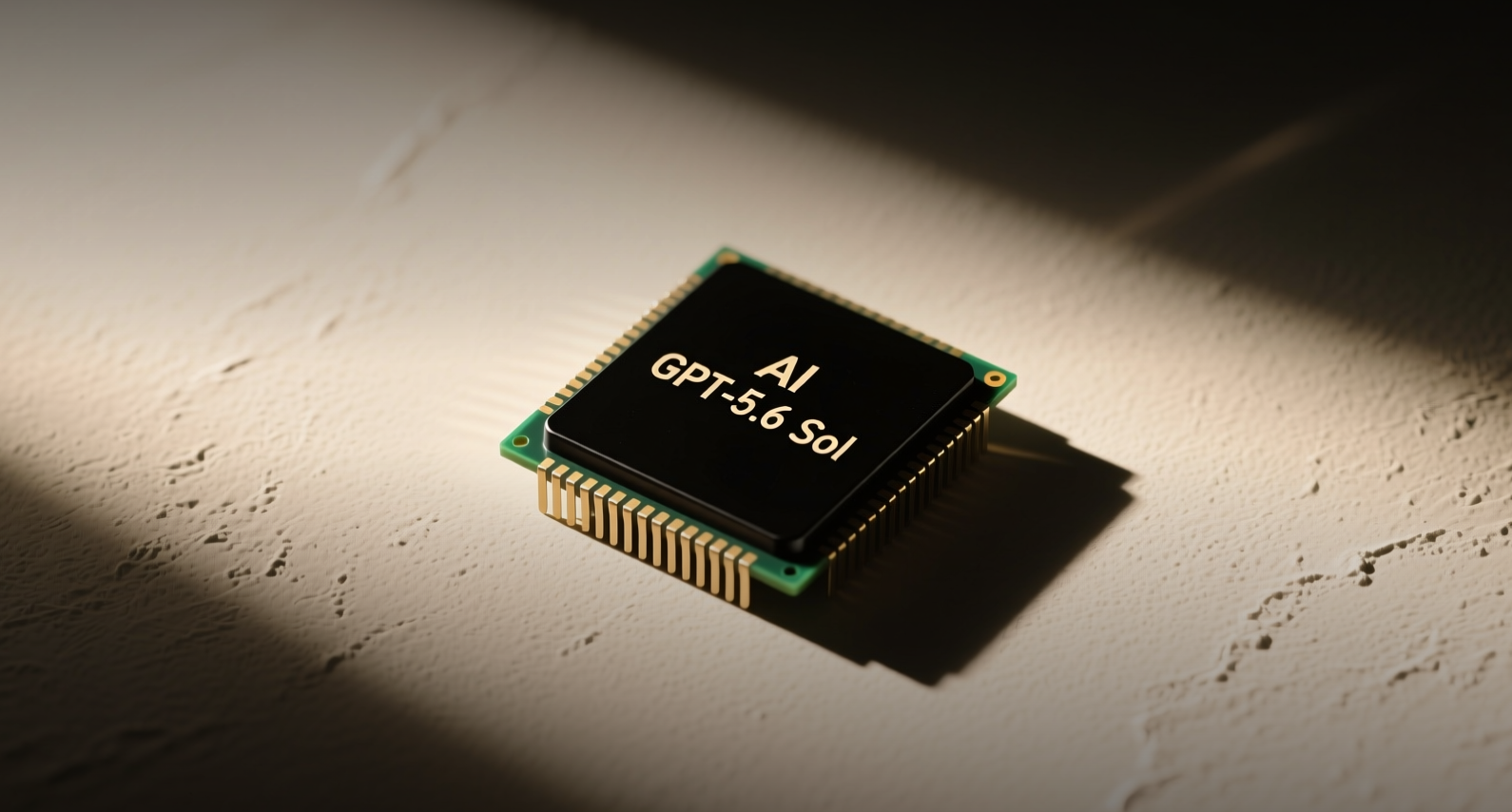
OpenAI's GPT-5.6 Sol costs $5 per million input tokens, nearly half the price of Anthropic's Claude Fable 5, as the company navigates government restrictions on its most capable model yet.
OpenAI's GPT-5.6 Sol costs $5 per million input tokens, roughly half the price of Anthropic's Claude Fable 5, as the company debuted three model tiers under a Trump administration-ordered limited rollout.
"We don't believe this kind of government access process should become the long-term default," OpenAI wrote in its announcement. "It keeps the best tools from users, developers, enterprises, cyber defenders, and global partners who need them."
The suite includes Sol, the flagship model priced at $5 per million input tokens and $30 per million output tokens; Terra, a mid-tier model at half Sol's cost; and Luna, an everyday model priced below Terra. Sol also features a "max" mode for deeper reasoning and an "ultra" mode that uses sub-agents, evoking the architecture of OpenClaw — whose creator Peter Steinberger now works at OpenAI. By comparison, Anthropic's Claude Fable 5 costs $10 per million input tokens and $50 per million output tokens.
The pricing pressure on Anthropic comes as OpenAI dedicates roughly 700,000 A100e GPU hours to automated red-teaming and works with third-party testers for the next two weeks. The Trump administration will approve customers on a case-by-case basis during the preview period, a process OpenAI called a short-term step toward broader availability in the coming weeks.
OpenAI said Sol is especially skilled at coding, cybersecurity, and biology, as well as maintaining focus during long-horizon agentic tasks. The company wrote that GPT-5.6 "is trained to refuse prohibited cyber assistance, including when users attempt to disguise their intent or jailbreak the model" — an apparent reference to recent jailbreaking incidents at rival Anthropic.
Sol does not cross the cyber-critical threshold under OpenAI's preparedness framework, the company said, though it noted the model "is better at helping people find and fix vulnerabilities than reliably carrying out end-to-end attacks." OpenAI revised its preparedness framework in April, removing some areas of previous study.
The company acknowledged that safeguards "may occasionally intervene on legitimate work, particularly in dual-use areas where defensive and offensive activity can initially look similar." That trade-off is part of what the two-week preview period is designed to test, OpenAI said.
For investors, the pricing structure shows OpenAI's intent to capture market share in the enterprise AI segment. At $5 per million input tokens, Sol undercuts Claude Fable 5 by 50% on input and 40% on output — a margin gap that could pressure Anthropic's pricing strategy as both companies race to deploy agentic AI workloads. Microsoft, OpenAI's largest investor and primary cloud partner, stands to benefit from broader GPT-5.6 adoption through Azure AI services, while Nvidia's GPU demand remains supported by the massive compute requirements — 700,000 A100e GPU hours for safety testing alone.
This article is for informational purposes only and does not constitute investment advice.
