

Nvidia Corp. has fallen back below the $200 mark, trailing the Nasdaq Composite as the artificial intelligence trade shifts from the Magnificent 7 into memory and chip ecosystem stocks.
Nvidia Corp. has fallen back below the $200 mark, trailing the Nasdaq Composite as the artificial intelligence trade shifts from the Magnificent 7 into memory and chip ecosystem stocks.
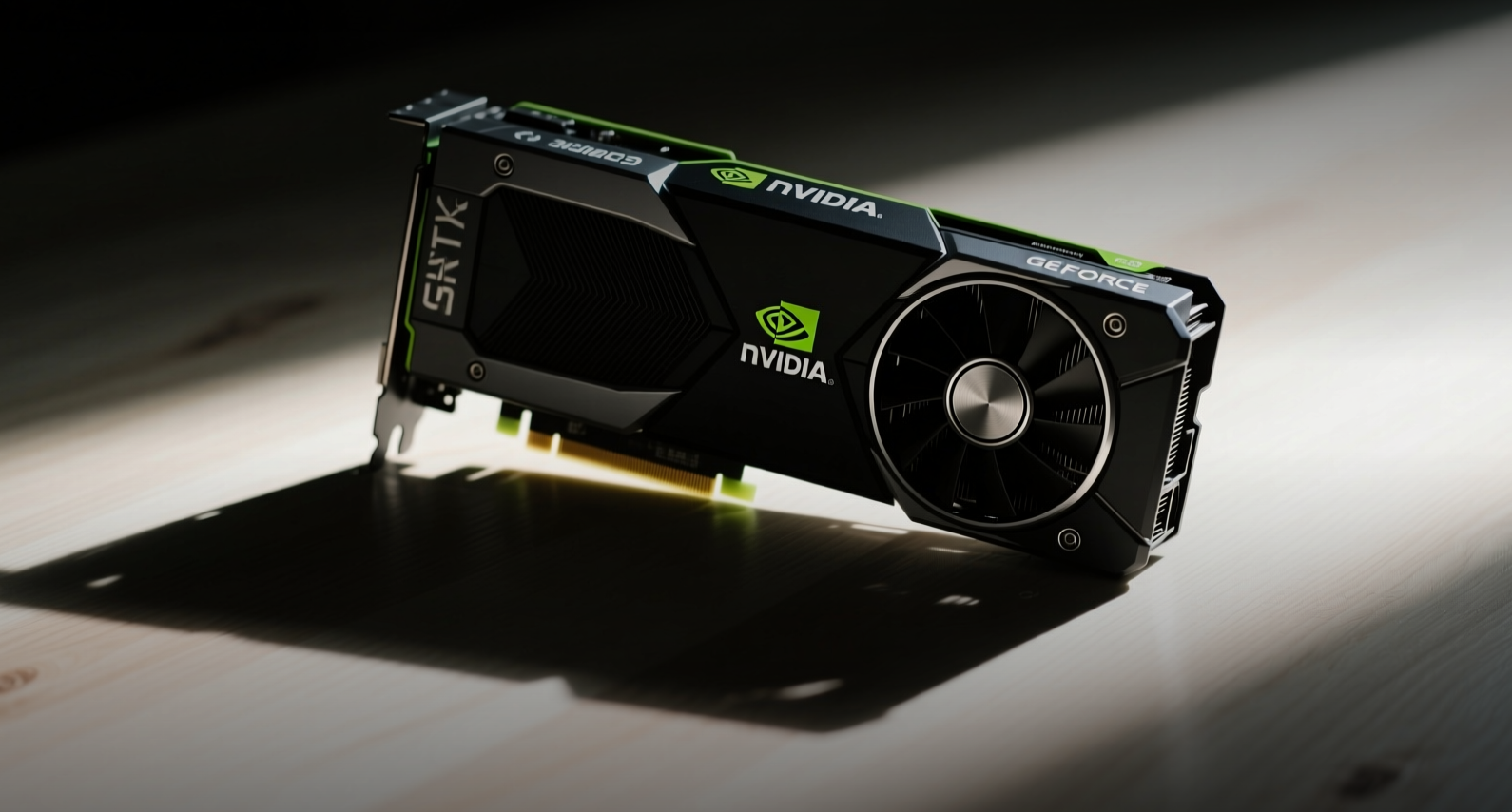
Nvidia Corp. slipped below $200 in late June, trailing the Nasdaq Composite this year as the artificial intelligence trade rotated from the Magnificent 7 into memory and chip ecosystem stocks.
"The rotation pressure is real, but I think it is temporary," said Micah Zimmerman, a contributor at The Motley Fool. "The companies printing money on AI compute aren't going away."
Nvidia shares gained 239% in 2023 and 171% in 2024 before rising 39% last year. The stock has risen about 35% over the past 12 months but is up roughly 6% year-to-date, underperforming the Nasdaq Composite. Of 67 analysts tracked by CNN, 94% assign a Buy rating, with an average price target of $300 implying roughly 50% upside from the current price near $200.
The rotation threatens Nvidia's position as the frontline AI bet. Memory maker Seagate Technology has surged 648% over the past year, while Intel has rallied more than 600% from its 2025 lows. SpaceX's $75 billion IPO in June absorbed institutional capital that might otherwise have flowed into AI infrastructure names, contributing to a 4.18% single-day Nasdaq drop on June 5.
AI Trade Shifts From Mag 7 to Memory Stocks
The Magnificent 7 are no longer the favorite AI plays for investors. SpaceX has positioned itself as more of an AI giant than a rocket and internet connectivity company, according to Barchart. Even Cathie Wood sold some Tesla shares to make way for SpaceX exposure.
Memory companies have seen their shares skyrocket this year. Seagate generated $3.11 billion in revenue in the fiscal third quarter, up 44% from a year earlier, with non-GAAP gross margins of 47% and free cash flow of $953 million. The company expects fiscal fourth-quarter revenue of about $3.45 billion. Chief Executive Dave Mosley said Seagate is "entering a new era of structural growth as AI applications amplify data creation and support sustained storage demand."
Other chip ecosystem companies are also benefiting. Advanced Micro Devices, Lam Research, and Applied Materials rank among the top S&P 500 gainers this year. Intel, which was fighting a survival battle until about a year ago with shares at multi-year lows, has rallied more than 600% from its 2025 trough following a series of positive developments.
SpaceX IPO Adds to Rotation Pressure
SpaceX completed the largest initial public offering in US history, raising $75 billion at a $1.75 trillion valuation. Anthropic has confidentially filed for an IPO targeting $30 billion at a valuation of roughly $965 billion, and OpenAI is expected to follow next year.
Fund managers receiving IPO allocations sell existing positions to make room, and they tend to sell what most closely resembles what they are buying — AI and tech stocks. The Nasdaq dropped 4.18% on June 5, its worst single day since April 2025, in the week before SpaceX priced its IPO. While the jobs report got the headlines, hedge funds were selling richly valued chip stocks and AI infrastructure companies to make room for SpaceX on their books, according to analysis by financial commentator Mark Hulbert.
If Anthropic and OpenAI follow within the next 12 months, the same mechanism could run again, putting additional pressure on Nvidia, Advanced Micro Devices, and other AI infrastructure names. The S&P 500 will not be adding SpaceX, Anthropic, or OpenAI for at least another year, but the Nasdaq amended its rules in May to allow megacap IPOs to enter the Nasdaq-100 within 15 days of listing. SpaceX is projected to land somewhere in the 0.5% to 1% weight range almost immediately, which could displace existing overweight constituents including Nvidia.
Nvidia continues to expand its technology portfolio. On June 22, the company launched the Vera Rubin platform for scientific computers, combining native double-precision performance with Nvidia CUDA-X libraries. It also introduced Nvidia Halos for Robotics, a safety system for robotics and physical AI, with Agility as the first customer. The new supercomputers at the Los Alamos National Laboratory will use Nvidia Vera CPUs to accelerate scientific discovery.
This article is for informational purposes only and does not constitute investment advice.
