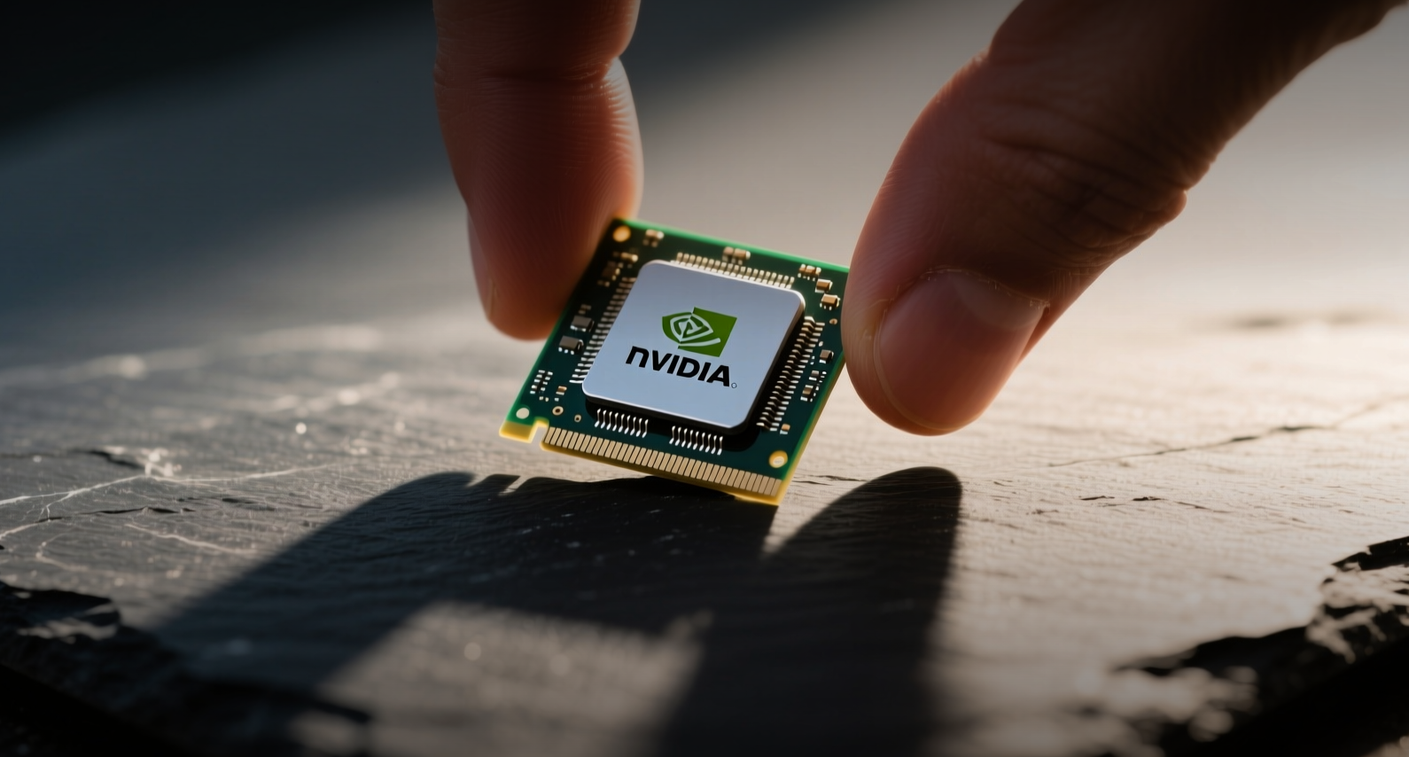
Nvidia's market cap dropped below $5 trillion for the first time since March, but the selloff may have created an entry point for investors betting on AI infrastructure spending.
Nvidia's market capitalization slipped below the $5 trillion threshold on June 23 as a broad tech selloff dragged semiconductor stocks lower, with shares falling 3 percent and the Nasdaq Composite dropping 2.5 percent in the same session. The decline came as nine Federal Reserve officials signaled the possibility of at least one rate hike in 2026, according to the Fed's June 17 meeting minutes, pushing risk assets lower across equities and cryptocurrencies alike.
"The selloff is a macro-driven rotation, not a Nvidia-specific problem," said Stacy Rasgon, senior analyst at Bernstein. "The company's data center GPU pipeline remains fully allocated through 2027, and the demand signals from hyperscalers are stronger than they were six months ago."
Nvidia's GPU architecture — spanning the H100, H200, and the upcoming Blackwell B200 on TSMC's 4nm process — commands an estimated 80 percent share of the AI accelerator market, according to industry data. The company's data center revenue has more than tripled year over year in each of the past four quarters, driven by cloud providers and enterprise customers racing to build out AI compute capacity. Nvidia trades at roughly 35 times forward sales with a 55 percent gross margin, compared with Advanced Micro Devices at 10 times sales and a 7 percent margin, per company filings.
The broader context for the pullback is that AI infrastructure spending has not peaked. McKinsey & Co. estimates the global buildout could require nearly $7 trillion in cumulative investment by 2030, with roughly $5.2 trillion tied directly to AI workloads. Commercial real estate firm JLL projects global data center capacity will nearly double by the end of the decade, requiring almost 100 gigawatts of new supply. Grid connection wait times in major markets already stretch beyond four years, making energized sites with existing power permits — like those held by Bitzero Holdings in Norway and Core Scientific in the US — increasingly valuable.
What the Selloff Means for Investors
The valuation reset may attract long-term institutional investors who had been waiting for a pullback to build positions. Nvidia's price-to-sales multiple has compressed from its 2025 peak of 45 times to roughly 35 times, bringing it closer to historical semiconductor averages while the company's earnings power continues to expand. Oracle, which reported cloud infrastructure revenue up 93 percent year over year in its fiscal fourth quarter, and AMD, which posted record data center revenue of $5.8 billion in the first quarter, both cited sustained GPU demand from Nvidia's supply chain.
The risk is that the Fed's hawkish tilt persists. If rate cuts remain off the table through year-end, high-multiple tech names could face continued pressure as investors rotate into value sectors. But for investors focused on the AI megatrend, the current pullback offers a lower entry price into the company that supplies the picks and shovels for the entire buildout.
This article is for informational purposes only and does not constitute investment advice.