


The picks-and-shovels suppliers are collecting the profits while the miners absorb the costs.
The picks-and-shovels suppliers are collecting the profits while the miners absorb the costs.
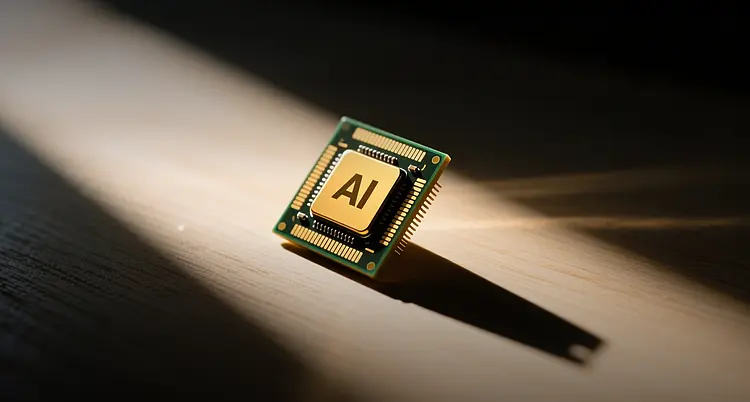
A generational transfer of capital is reshaping the AI economy. The companies building the infrastructure are collecting the profits while the companies paying for it absorb the costs.
Nvidia Corp. (NVDA), Micron Technology Inc. (MU), Broadcom Inc. (AVGO), and Applied Materials Inc. (AMAT) are projected to generate a combined $430 billion in free cash flow over the next 12 months — more than three times what those four companies produced just two years ago, according to Bank of America research. Over the same period, Amazon.com Inc. (AMZN), Alphabet Inc. (GOOGL), Meta Platforms Inc. (META), Microsoft Corp. (MSFT), and Oracle Corp. (ORCL) are on track to see combined free cash flow turn negative for the first time on record, a dramatic reversal from their roughly $260 billion peak in 2024.
"This is the classic picks-and-shovels dynamic playing out in real time," said Rachel Kim, semiconductor analyst at Edgen. "The hyperscalers are spending $1.8 trillion on AI infrastructure through 2027, and the bulk of that money flows straight to the chip and equipment suppliers before a single AI workload generates a return."
The scale of the buildout is unprecedented. Research firm SemiAnalysis projects cumulative AI IT and datacenter capital expenditures will reach roughly $11.1 trillion between 2024 and 2029, with annual spending topping $2 trillion by 2028. AI-related debt backed by GPU contracts and datacenter leases could hit $7.1 trillion by 2029, making it second only to the US mortgage market as a new asset class built around AI compute.
Nvidia captures $0.57 of every hyperscaler AI dollar spent, according to SemiAnalysis. Micron has become equally indispensable on the memory side: the company reported fiscal third-quarter revenue of $41.5 billion, up 346 percent from a year earlier, with consolidated gross margins hitting a record 84.9 percent. The company has signed 16 strategic customer contracts representing roughly $100 billion in remaining performance obligations tied to minimum committed volumes and pricing.
Why hyperscalers are spending through the pain
The five largest cloud providers are expected to pour roughly $1.8 trillion into AI-related capital expenditures during 2026 and 2027, according to BofA. That spending covers GPUs, high-bandwidth memory, networking equipment, semiconductor manufacturing tools, servers, cooling systems, and power infrastructure — all before meaningful AI service revenue materializes.
Only about one-quarter of AI capital expenditures ultimately flows directly into chips, according to industry estimates. The rest supports buildings, cooling, electrical infrastructure, and networking. That diversification should soften the impact of any future spending slowdown, but it also means hyperscalers are committing enormous sums to assets that won't generate returns for years.
The financing mechanism adds another layer. SemiAnalysis estimates AI infrastructure providers will borrow against long-term GPU contracts and datacenter lease agreements, creating predictable cash flows that serve as collateral. If AI adoption or monetization disappoints, lenders — not just shareholders — would feel the effects.
The risk hiding inside the AI trade
The biggest danger for chip stocks is that their customers stop spending. A handful of hyperscalers account for the vast majority of demand for advanced AI chips, high-bandwidth memory, and networking hardware. If enterprise AI adoption disappoints, power constraints slow deployments, or software efficiency reduces hardware requirements, capital spending could cool sooner than expected.
Micron's stock has already shown what that risk looks like. Shares fell sharply after the company reported record June-quarter profits and a bullish outlook — a sign that investors may already be pricing in perfection. The company's data-center revenue topped $25 billion for the quarter, putting it on an annualized run rate above $100 billion, yet the stock sold off.
"The market is asking whether hyperscalers can sustain this pace," Kim said. "Micron's $100 billion in customer commitments provides unusual visibility for a memory company, but the stock's reaction shows that even great numbers may not be enough when expectations are this high."
Once the current build-out peaks, the cash flow leadership is expected to rotate. Hyperscalers would shift from rapid expansion toward maintenance and measured growth, allowing operating cash flow from Azure, Google Cloud, AWS, and enterprise AI services to flow back to shareholders. For now, though, the suppliers are winning — and the numbers show it.
This article is for informational purposes only and does not constitute investment advice.