

MiniMax M3's 20x inference efficiency gain failed to sustain a morning rally, as MINIMAX-W shares reversed 17 percentage points to close in the red.
MiniMax M3's 20x inference efficiency gain failed to sustain a morning rally, as MINIMAX-W shares reversed 17 percentage points to close in the red.
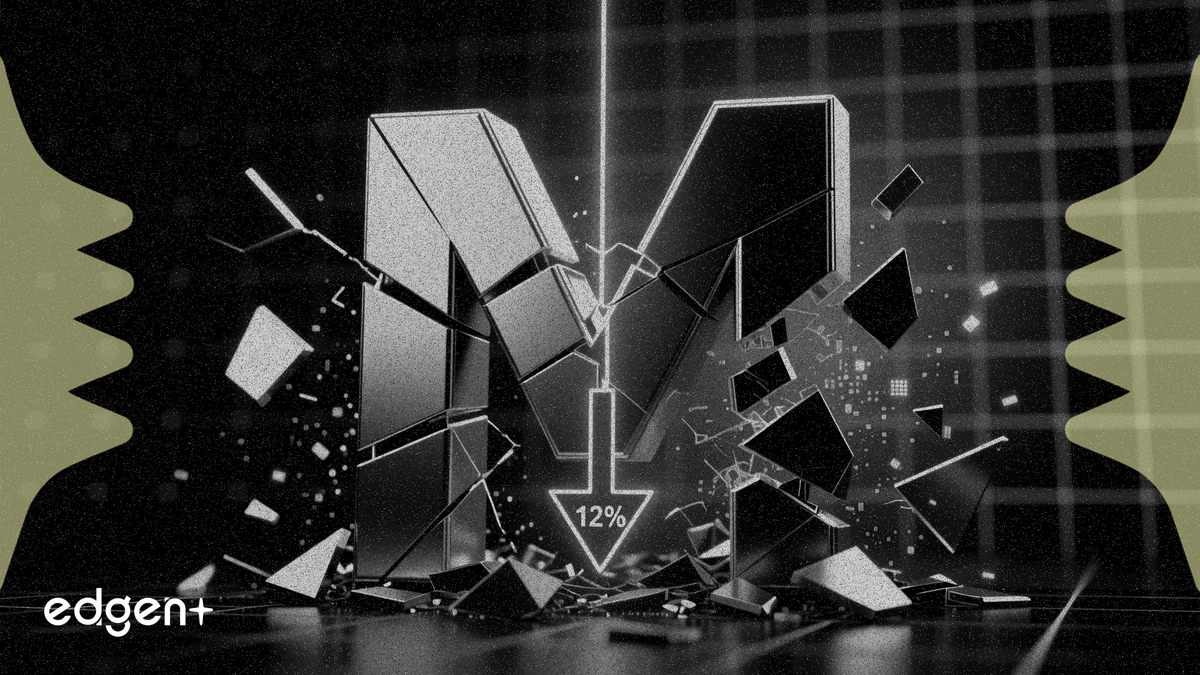
MiniMax M3's 20x inference efficiency gain failed to sustain a morning rally, as MINIMAX-W shares reversed 17 percentage points to close in the red.
MiniMax M3, a new general model with a 1-million-token context window and 20x inference efficiency gain, debuted Monday as parent MINIMAX-W shares swung from a 5.2% gain to a 12% loss.
The model uses a newly developed sparse attention architecture called MiniMax Sparse Attention, which reduces per-token computation to about one-twentieth of the previous generation, the company said. "M3 achieves generational breakthroughs in programming, agent capabilities, ultra-long context handling and native multimodality," MiniMax said in a statement.
The 1-million-token context window allows the model to process entire codebases or lengthy documents in a single pass, a capability that rivals offerings from DeepSeek and other Chinese AI labs. The efficiency gain means each inference query costs roughly 5% of the prior model's compute, a metric that directly affects the economics of deploying AI at scale for enterprise customers. Most large language models today charge per token for API access, making inference cost a key competitive differentiator.
MINIMAX-W opened 5.24% higher at HKD907.5 before reversing to close at HKD736, a 12.38% decline from the previous session. More than 1.8 million shares changed hands, worth HKD1.49 billion. Short selling totaled $110.98 million, representing 5.18% of turnover, according to exchange data.
The sharp reversal suggests investors are weighing the technology's promise against the timeline for revenue generation. UBS has said model upgrades could accelerate monetization, though near-term profitability remains unproven for the AI startup, which listed in Hong Kong earlier this year. The M3's 20x efficiency improvement could lower inference costs significantly, a key factor in the competitive race among Chinese AI developers to capture enterprise customers from incumbents like Baidu's Ernie and Alibaba's Qwen.
MINIMAX-W trades at a valuation that reflects high growth expectations but limited revenue visibility, a dynamic common among pre-profit AI companies. The stock's intraday reversal — a 17-percentage-point swing from peak to close — signals that even a genuine technical breakthrough may not be enough to sustain momentum in a market demanding near-term results.
This article is for informational purposes only and does not constitute investment advice.
