

MicroVision's lidar sensors are being evaluated by one of the world's largest AI companies, a test that could determine whether the perception technology finds a home in the next generation of robotics and autonomous systems.
MicroVision's lidar sensors are being evaluated by one of the world's largest AI companies, a test that could determine whether the perception technology finds a home in the next generation of robotics and autonomous systems.
MicroVision's lidar sensors are being evaluated by one of the world's largest AI companies, a test that could determine whether the perception technology finds a home in the next generation of robotics and autonomous systems.
MicroVision has delivered its MOVIA lidar sensors to a leading AI hyperscaler for evaluation in robotics and autonomous systems, betting that real-world perception will become a critical layer as artificial intelligence expands into physical environments. The Redmond, Washington-based company said the unnamed customer — a global leader in AI and large-scale computing infrastructure — will test the sensors for machine perception, object detection, and spatial intelligence applications.
"AI systems can only be as effective as their understanding of the world around them," Glen DeVos, chief executive officer of MicroVision, said. "Perception serves as the bridge between intelligence and action."
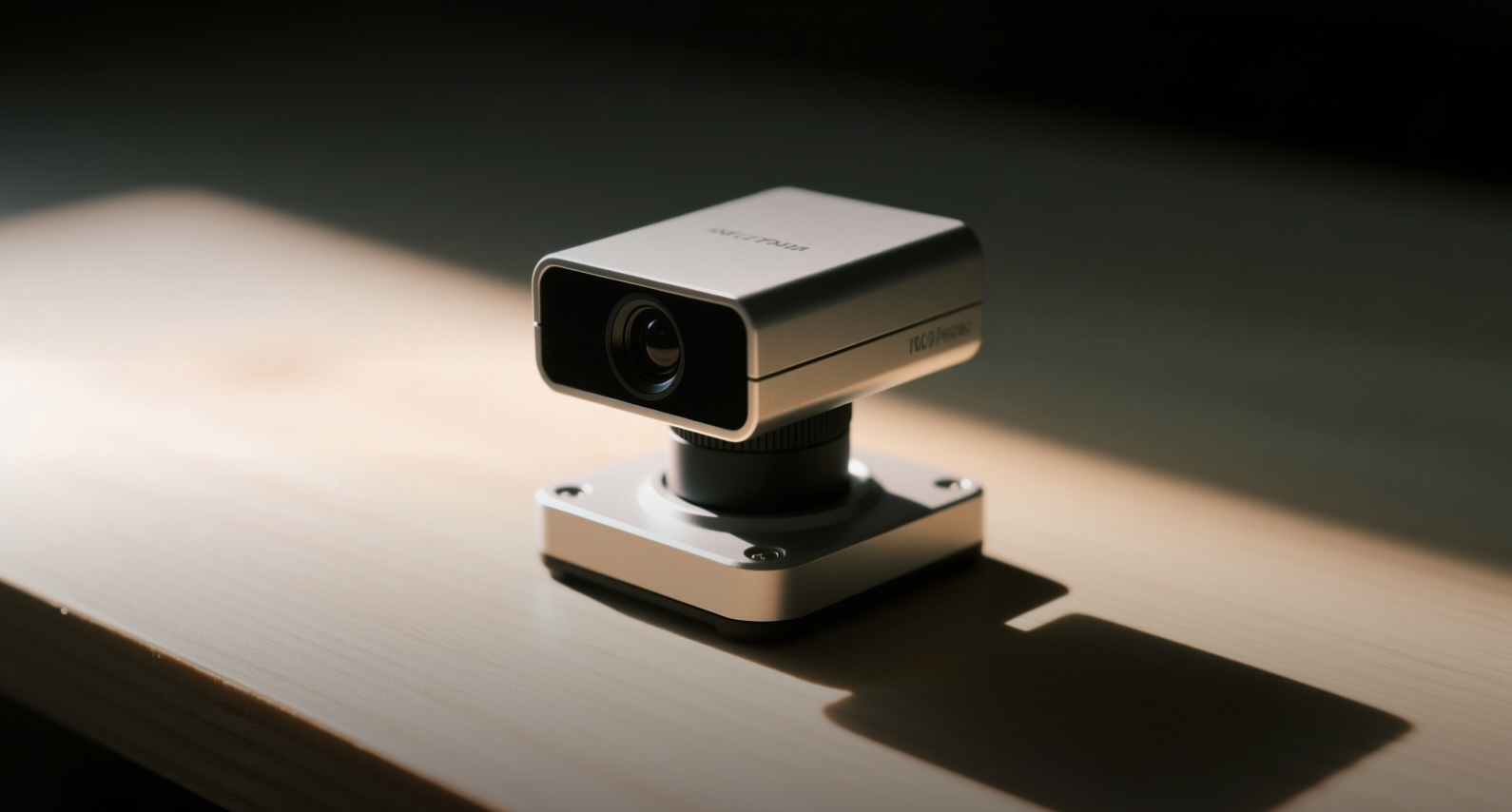
The MOVIA S platform delivers high-resolution, low-latency perception data in a compact form factor, designed for object detection, classification, and tracking across robotics, industrial automation, and autonomous systems. The sensors complement MicroVision's existing IRIS long-range lidar, which targets highway-speed automotive applications. Both platforms share the company's perception software stack for real-time environmental awareness.
MicroVision shares trade at $0.28, near their 52-week low, giving the company a market capitalization of $92.8 million. With $1.55 million in trailing twelve-month revenue and a history of operating losses, a successful evaluation — and potential production order — represents a critical catalyst for the company's financial trajectory.
The delivery marks a strategic push by MicroVision to expand beyond its traditional automotive and industrial markets into robotics and AI, sectors where demand for perception technology is accelerating. As AI systems move from data centers into warehouses, factories, and public spaces, the need for accurate real-time environmental sensing has become a foundational requirement, according to DeVos.
MicroVision competes in a crowded lidar market that includes Luminar Technologies, Ouster, and China's Hesai Group. Yole Group projects the global lidar market will exceed $6 billion by 2030, driven by automotive ADAS, robotics, and industrial automation. Unlike Luminar, which focuses primarily on long-range automotive lidar with its Iris sensor, MicroVision has diversified across short-range MOVIA and long-range IRIS platforms, targeting industrial, security, and defense verticals alongside automotive.
The company maintains engineering centers in the U.S. and Germany and offers solid-state sensors at multiple wavelengths with an open software architecture — a design philosophy aimed at winning contracts across multiple industries rather than relying on a single automotive design win. The MOVIA platform's compact form factor makes it suitable for integration into robotic systems where space and power constraints are tight.
For investors, the hyperscaler evaluation represents a potential inflection point for a stock trading at minimal expectations. MicroVision reported Q1 2026 earnings per share of $0.08, beating consensus estimates of -$0.04, though revenue of $0.9 million missed the $3.43 million analysts had projected. The company has applied to transfer its Nasdaq listing to the Capital Market tier to gain additional time to meet the exchange's minimum bid price requirement. The evaluation timeline and any potential follow-on orders have not yet been disclosed.
This article is for informational purposes only and does not constitute investment advice.
