
The US storage chip and hardware supply chain index crashed 10.32% on Thursday, its worst single-day drop on record, as a Morningstar warning of 20% to 30% downside for AI memory stocks triggered a sector-wide rout.
The US storage chip and hardware supply chain index crashed 10.32% on Thursday, its worst single-day drop on record, as a Morningstar warning of 20% to 30% downside for AI memory stocks triggered a sector-wide rout.
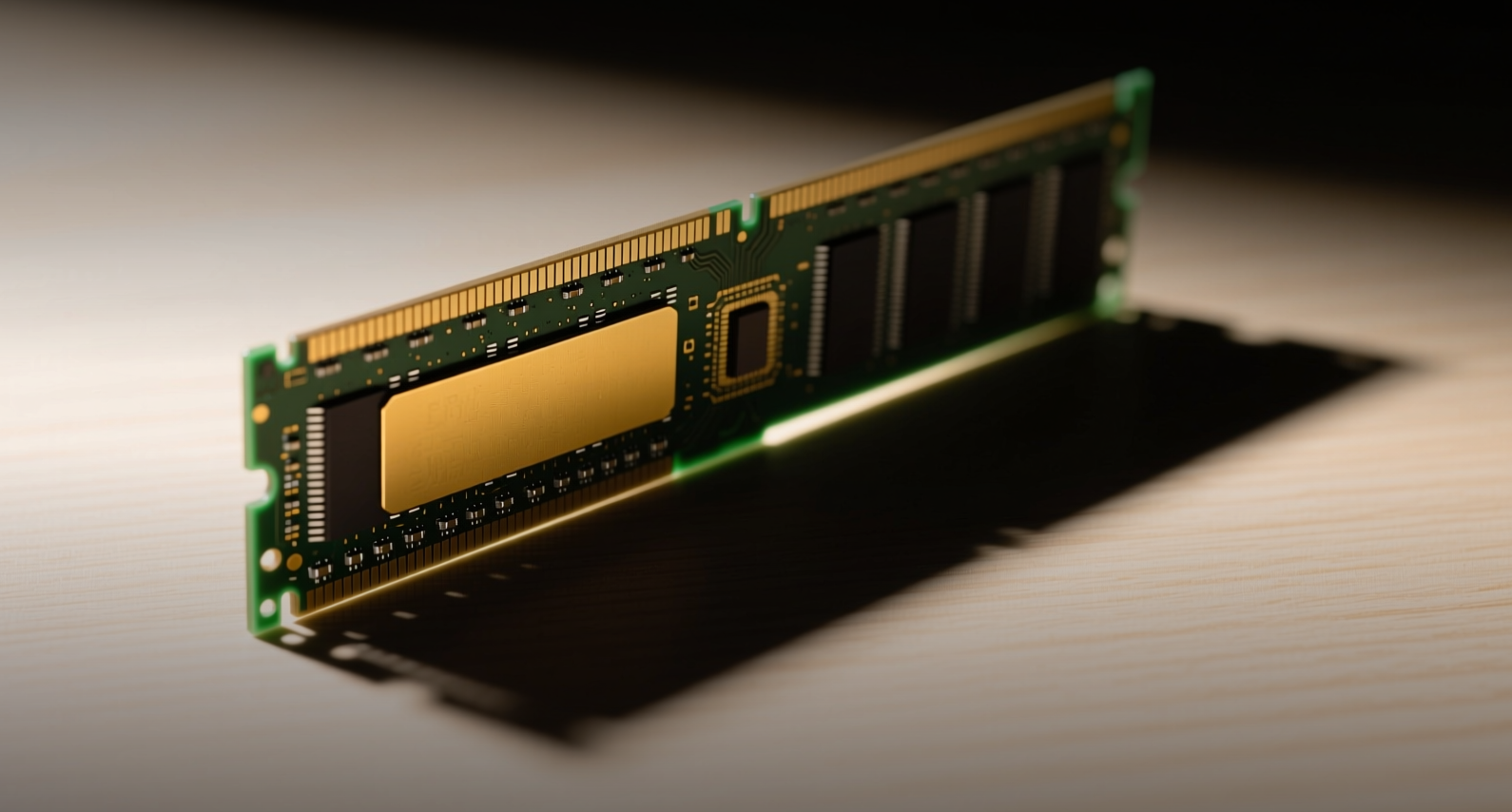
The US storage chip and hardware supply chain index crashed 10.32% on Thursday, its worst single-day drop on record, as a Morningstar warning of 20% to 30% downside for AI memory stocks triggered a sector-wide rout.
The index closed at 218.59 points, bringing its weekly decline to 11.21%. Every constituent stock fell, with SanDisk (NASDAQ:SNDK) plunging 14.1%, Teradyne (NASDAQ:TER) dropping 13.6%, and Seagate Technology (NASDAQ:STX), Lam Research (NASDAQ:LRCX), and Western Digital (NASDAQ:WDC) each sliding about 10%. Rambus (NASDAQ:RMBS), Applied Materials (NASDAQ:AMAT), and Micron Technology (NASDAQ:MU) fell between 5.5% and 8.8%.
"The explosiveness of the returns you saw in the second quarter — it is a bit scary in that sense because the market is extrapolating for the strong growth to continue through 2028. We have our doubts there," Lorraine Tan, director of research at Morningstar, said on Bloomberg TV. "We expect spending to taper off."
Tan's warning centered on capacity additions from Samsung and SK Hynix, which she said would soften memory pricing as supply catches up with demand. The Roundhill Memory ETF (CBOE:DRAM), which holds Samsung at 25%, SK Hynix at 24%, and Micron at 24%, fell 5% to $62 on Thursday, extending a pullback from its parabolic run earlier this year. The ETF had more than doubled in 2026 before the current selloff.
The capacity reckoning hits peak-cycle earnings
The sell-side bull case remains intact, creating a sharp divide. Bank of America raised its SanDisk price target to $2,500 from $2,100 with a Buy rating on Wednesday, arguing NAND supply-demand dynamics should stay favorable through 2027. That target sits well above SanDisk's $1,802 close after Thursday's 14% plunge.
Micron's fundamentals illustrate the tension. The company reported fiscal Q3 revenue of $41.46 billion, up 346% year over year, with non-GAAP gross margin of 84.6% and earnings per share of $25.11. It guided fiscal Q4 revenue to $50 billion, citing multi-year Strategic Customer Agreements as insulation from pricing cycles. Yet Micron stock trades at a forward price-to-earnings ratio of just 7 times — a multiple that signals the market doubts current earnings power is sustainable.
SanDisk's datacenter revenue surged 645% year over year to $1.47 billion, and Western Digital cleared 50% non-GAAP gross margin for the first time. Those are textbook peak-cycle results, exactly the kind of "loftiness" Tan expects to normalize as Samsung and SK Hynix bring new fabrication capacity online.
What the selloff means for investors
The memory sector has been the runaway trade of 2026. Micron is up 305% year to date, SanDisk has surged 858%, and Western Digital has gained 271%. Even after Thursday's 10% index decline, the group remains up several hundred percent from the start of the year.
The bear case, articulated by Morningstar, rests on two pillars: new memory supply from Samsung and SK Hynix that could compress pricing, and a plateau in AI capital expenditure growth after 2026. Tan said she expects a 20% to 30% correction for "a good percentage" of the AI names she covers before they become buyable again.
The bull case counters that AI-driven demand for high-bandwidth memory — the stacked DRAM modules used in Nvidia's Blackwell accelerators — will outpace supply additions through 2027. Micron's forward P/E of 7 times, compared with the consensus analyst target of $1,410, implies roughly 42% upside from Thursday's close near $992 if earnings hold.
For investors, the question is one of timing rather than direction. Both the bull and bear cases can be correct on different horizons. The selloff tests conviction at prices far higher than where the rally began, and the next catalyst — Samsung and SK Hynix's quarterly earnings, HBM4 pricing data, and hyperscaler capex guidance into 2027 — will determine whether Thursday's crash was a buying opportunity or the start of a deeper reset.
This article is for informational purposes only and does not constitute investment advice.
