

Intel's 180% year-to-date surge has pushed shares past their dot-com peak, with the July 23 investor update set to test whether the foundry turnaround can justify a 125 times forward earnings multiple.
Intel's 180% year-to-date surge has pushed shares past their dot-com peak, with the July 23 investor update set to test whether the foundry turnaround can justify a 125 times forward earnings multiple.
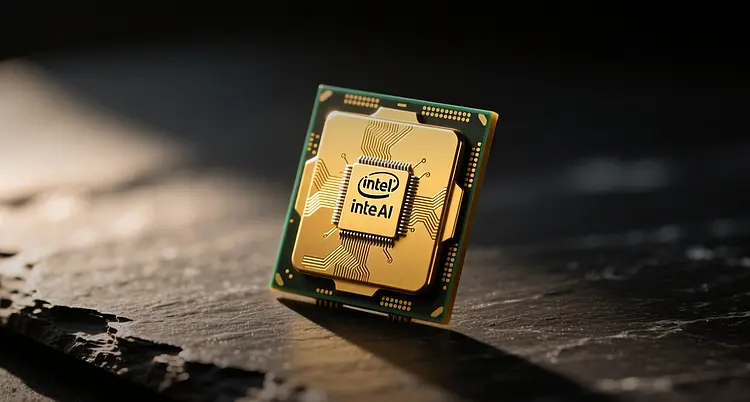
Intel Corp.'s 180% year-to-date rally has erased 26 years of losses for dot-com-era buyers, but the stock's 125 times forward earnings multiple leaves no room for error ahead of the July 23 investor update.
"The foundry story is now too good to ignore," HSBC analyst Frank Lee said after doubling his price target to $200, the highest on Wall Street. "Intel is emerging as a credible alternative to TSMC as front-end fabrication constraints tighten."
The Santa Clara, California-based chipmaker reported first-quarter revenue of $13.58 billion, up 7% from a year earlier and topping the $12.39 billion consensus. Adjusted earnings per share of $0.29 crushed the $0.01 estimate, helped by aggressive cost-cutting and a shift toward higher-margin products. Data Center and AI revenue surged 22% to $5.1 billion, while Intel Foundry revenue climbed 16% to $5.4 billion — though the segment remained unprofitable with a $2.4 billion operating loss.
The July 23 update comes at a pivotal moment. Intel's market capitalization has swelled to roughly $555 billion, and the stock now trades above the average analyst price target of $102.87. With HSBC's $200 target implying another 78% upside, the question is whether Intel's foundry business — still losing money — can grow fast enough to justify the valuation.
The Foundry Bet That Could Reshape Intel
Intel's turnaround under CEO Lip-Bu Tan hinges on its foundry business, which manufactures chips for third-party customers using the company's advanced process nodes. The segment's $2.4 billion operating loss in the first quarter underscores the scale of the challenge, but several developments suggest momentum is building.
Tesla Inc. plans to build its Terafab semiconductor facility in Austin, Texas, using Intel's upcoming 14A manufacturing process, according to Wedbush analyst Matt Bryson. The decision signals growing confidence in Intel's next-generation chipmaking capabilities, even as Bryson cautioned that the project relies on a process still being finalized for products and markets not yet fully defined.
Apple Inc. has also partnered with Intel's foundry business, joining a customer list that includes Alphabet Inc. and Nvidia Corp., according to HSBC. Intel's Embedded Multi-die Interconnect Bridge (EMIB) advanced packaging technology — which connects multiple chips in a single package — has emerged as a competitive differentiator as demand for complex AI processors grows.
The AI Opportunity and the Valuation Question
Intel's collective AI-driven businesses now represent 60% of revenue and grew 40% year over year, management said on the first-quarter earnings call. The company's Xeon server CPUs are seeing demand outpace supply, and Intel 3-based Xeon 6 and Intel 18A-based Core Series 3 products have entered full-volume production — the company's fastest new product ramp in five years.
Yet the stock's valuation remains extreme by any historical measure. At 125 times forward earnings and 11.6 times sales, Intel trades well above both the semiconductor sector average and its own historical range. The premium reflects investor expectations that the foundry business will transition from a loss-making operation to a meaningful profit contributor — a transition that has no guaranteed timeline.
Of the 46 analysts covering Intel, 11 rate it a Strong Buy, 32 recommend Hold, and two say Strong Sell. The consensus rating has shifted from Hold to Moderate Buy in recent weeks as price targets have risen, but the stock has already blown past the average target.
What to Watch on July 23
The investor update is expected to provide details on Intel's foundry customer pipeline, 14A process technology progress, and second-quarter results due after the close. Intel guided for Q2 revenue of $13.8 billion to $14.8 billion and non-GAAP gross margin of about 39%, as the company balances manufacturing expansion costs with the ramp of next-generation AI chips.
For investors, the risk-reward equation is straightforward. If Intel's foundry business gains enough traction to justify the current multiple, the stock could continue its rally. If execution slips or customer commitments fall short, the 125 times forward earnings multiple leaves little room for disappointment — a lesson the dot-com bubble taught painfully.
This article is for informational purposes only and does not constitute investment advice.