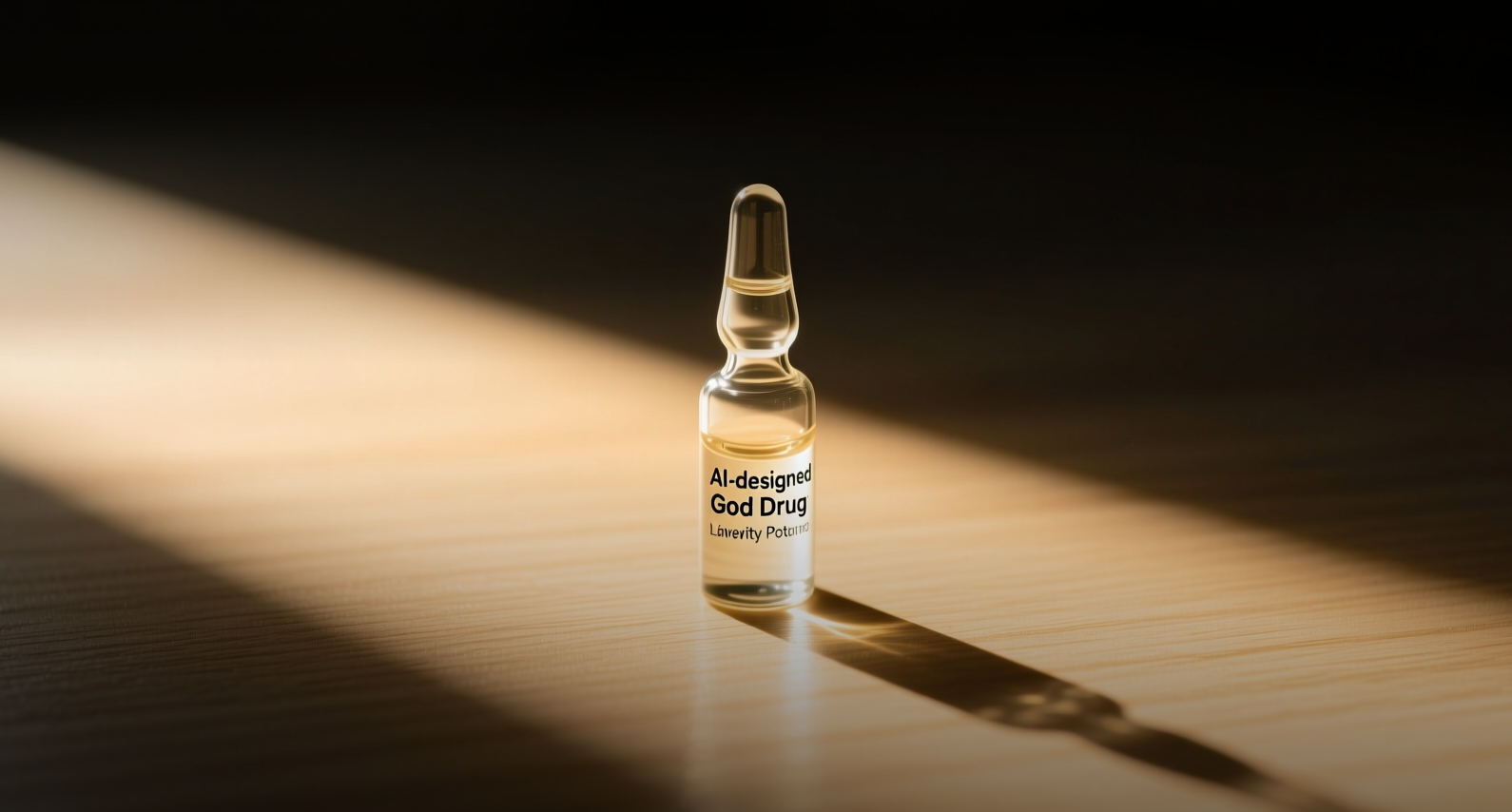
InSilico Medicine, the first company to bring a generative-AI-designed drug to clinical trials, is betting that longevity treatments will propel it to the top of China's pharmaceutical industry.
InSilico Medicine, the Hong Kong-based biopharma that pioneered the use of generative artificial intelligence for drug discovery, has set its sights on becoming China's No. 1 pharmaceutical company by developing what its founder calls a "God Drug" — a treatment targeting the biology of aging itself.
The company, which made history in 2021 when its AI-designed fibrosis drug INS018_055 became the first generative-AI candidate to enter human trials, is now pivoting toward longevity and age-related diseases as its next growth engine, according to people familiar with the strategy. The ambition reflects a broader shift in Chinese biotech, where companies are moving beyond me-too drugs and fast-follower strategies toward first-in-class science.
"We want to be the undisputed leader in China, and the only way to do that is to go after the biggest unmet need — aging," Alex Zhavoronkov, founder and chief executive officer of InSilico Medicine, said in a recent interview. "A drug that modifies the aging process would be the biggest blockbuster in history."
InSilico's pipeline spans more than 30 programs across fibrosis, oncology, immunology, and age-related diseases. Its lead candidate, INS018_055, a small-molecule antifibrotic targeting idiopathic pulmonary fibrosis, has completed Phase 1 trials in China and Australia with a favorable safety profile, and the company is preparing for Phase 2 studies. The drug was designed entirely by InSilico's proprietary AI platform, Chemistry42, which generates novel molecular structures and predicts their pharmacological properties.
The company's longevity strategy centers on discovering compounds that target fundamental aging mechanisms — including cellular senescence, mitochondrial dysfunction, and epigenetic reprogramming — rather than treating individual age-related diseases in isolation. InSilico has identified several preclinical candidates targeting these pathways and expects to nominate a development candidate for its lead longevity program within the next 12 months, the company said.
The AI advantage and the competition
InSilico's AI platform gives it a structural cost advantage over traditional drug discovery. The company estimates that its end-to-end AI system can reduce the time from target identification to preclinical candidate nomination to as little as 12 months, compared with an industry average of four to six years. The platform integrates generative chemistry, biology prediction, and clinical trial simulation into a single workflow.
The approach has attracted significant partnerships. In January, InSilico struck a deal with Fosun Pharma to co-develop a brain-penetrant NLRP3 inhibitor for neurodegenerative diseases, with Fosun paying an undisclosed upfront fee and committing to milestones. The partnership gives InSilico access to Fosun's clinical development and commercialization infrastructure in China, while Fosun gains a stake in InSilico's AI-driven pipeline.
InSilico also faces competition from a growing field of AI-native biotechs. Recursion Pharmaceuticals, now part of the combined Recursion-Exscientia entity, has advanced AI-discovered candidates into clinical trials for oncology and rare diseases. Isomorphic Labs, the Alphabet-backed AI drug discovery company led by DeepMind's Demis Hassabis, is applying AlphaFold-derived technology to drug design. And China's own XtalPi and DeepOrigin are building competing AI drug discovery platforms.
The longevity bet and the road ahead
The longevity market represents a potential paradigm shift in medicine, but it remains scientifically contentious. No drug has ever been approved by a major regulator for the indication of "aging" itself, and the U.S. Food and Drug Administration does not recognize aging as a treatable condition. Companies pursuing longevity therapies typically target specific age-related diseases — such as Alzheimer's, sarcopenia, or cardiovascular disease — while collecting biomarkers of aging as secondary endpoints.
InSilico's approach is to develop drugs that address both specific diseases and the underlying biology of aging simultaneously. Its preclinical longevity candidates target pathways such as mTOR signaling, NAD+ metabolism, and senolytic clearance of aged cells — mechanisms that have shown promise in animal models but have yet to demonstrate clear clinical benefit in humans.
The company has sufficient cash runway through 2027, according to its most recent financial disclosures, supported by a $255 million Series D round raised in 2022 and ongoing partnership revenue. InSilico has not disclosed plans for an initial public offering, though a Hong Kong or Nasdaq listing has been speculated by analysts covering the sector.
For investors, the thesis hinges on whether InSilico can translate its AI platform into a commercially approved drug — something no AI-native biotech has yet achieved. If INS018_055 succeeds in Phase 2, it would validate the generative AI approach to drug discovery and open the door to a pipeline valued by analysts at potentially billions of dollars. If it fails, the longevity narrative may struggle to gain credibility without a clinical proof point.
"InSilico has the most advanced end-to-end AI platform in the industry, but the market is still waiting for a registered drug," Sam Goldstein, biotech analyst at Edgen, said. "A positive Phase 2 readout for INS018_055 would be the catalyst that transforms the narrative from promise to proof."
This article is for informational purposes only and does not constitute investment advice.