
The US government is betting $250 million that a pulsed-power company with roots in nuclear weapons research can crack the silicon-carbide manufacturing challenge.
The US government is betting $250 million that a pulsed-power company with roots in nuclear weapons research can crack the silicon-carbide manufacturing challenge.
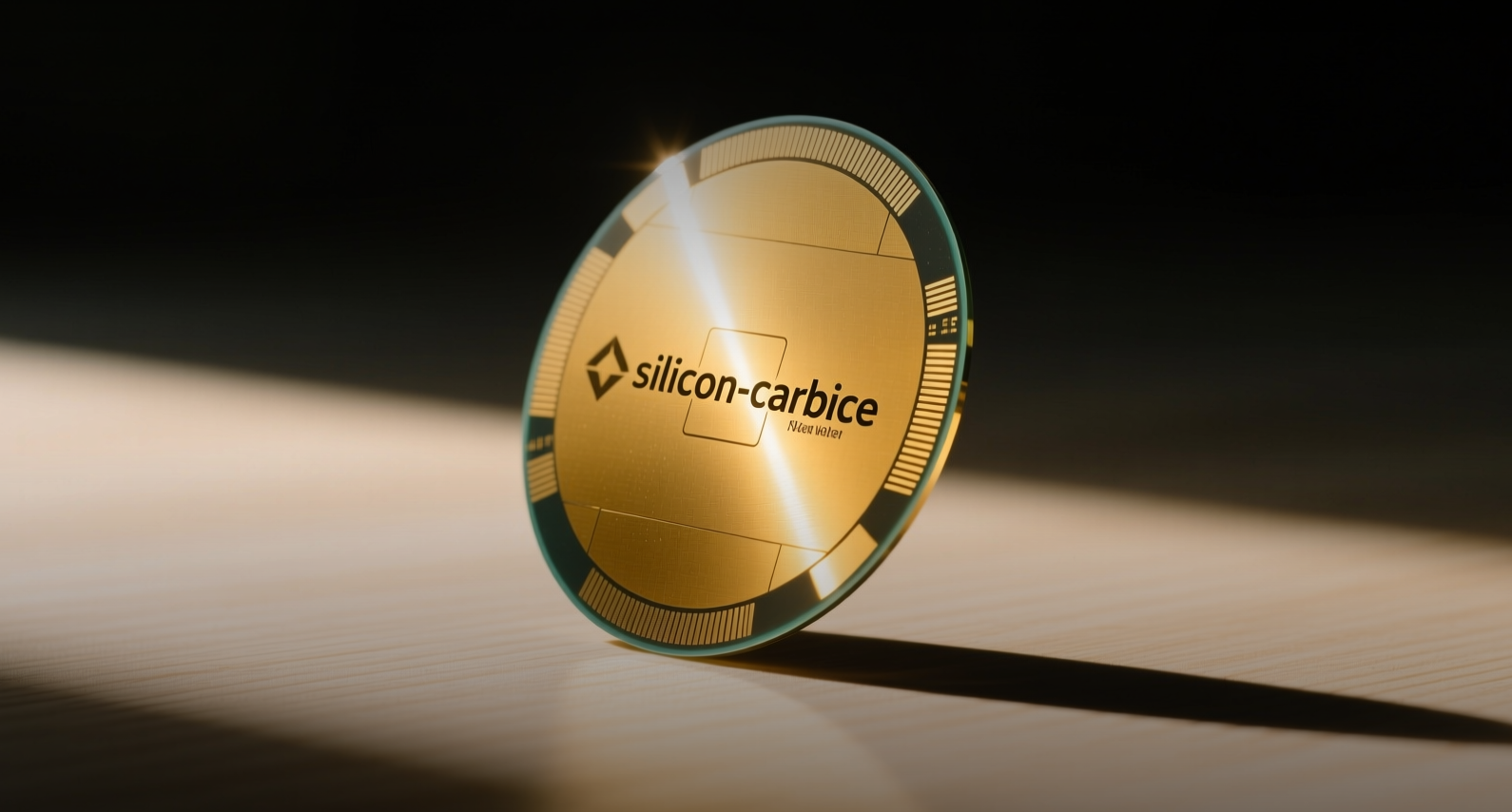
The US government is betting $250 million that a pulsed-power company with roots in nuclear weapons research can crack the silicon-carbide manufacturing challenge.
The US Department of Commerce awarded I-Pulse $250 million through the CHIPS and Science Act to develop silicon-carbide semiconductors using pulsed-power technology repurposed from Sandia National Laboratories' nuclear weapons research.
"With today's announced investment, the Trump administration is strengthening America's capabilities and enhancing its national and energy security goals," Secretary of Commerce Howard Lutnick said.
The award funds research and development for high-temperature, high-performance silicon-carbide components, including solid-state switches capable of handling extreme voltage and current. I-Pulse will develop these in partnership with US national laboratories, universities, and specialized manufacturers. The company, co-founded in 2007 by mining billionaire Robert Friedland and Laurent Frescaline, had already raised more than $324 million from investors including BHP and Ivanhoe Mines before this award.
The investment positions a niche defense spinoff to challenge established silicon-carbide players like Wolfspeed and STMicroelectronics, which have invested billions in conventional manufacturing capacity. If I-Pulse's pulsed-power approach works at commercial scale, it could lower the cost of chips needed for electric vehicles, data center power systems, and geothermal drilling — a technology the company says could unlock baseload renewable power for America's growing fleet of data centers.
I-Pulse's technology traces directly to the Z Machine at Sandia National Laboratories in Albuquerque, the world's most powerful pulsed-power accelerator, where Dr. Rick Spielman — now president of I-Pulse Albuquerque — led development. The company compresses the energy of a cell phone battery into a discharge equivalent to a nuclear power plant's output over less than 10 millionths of a second, according to the company. That capability, originally designed to simulate nuclear weapons effects, is now being adapted to fracture rock for geothermal drilling and to manufacture advanced semiconductors.
The silicon-carbide switches I-Pulse aims to commercialize would enable drilling in high-temperature rock conditions by applying powerful electrical pulses that soften granite ahead of the drill bit, multiplying drilling speed and extending bit life. The company's geothermal subsidiary, G-Pulse, plans to deploy the technology to tap hot dry granite formations for 24/7 baseload power — a potential solution for the energy demands of data centers and domestic industrial operations.
For the semiconductor industry, the award represents a bet on an unconventional manufacturing approach. Established silicon-carbide producers like Wolfspeed and STMicroelectronics have spent years optimizing crystal growth and wafer fabrication. I-Pulse's method — using precisely timed energy pulses rather than continuous thermal processes — could offer advantages in material purity and production speed, though the company has not disclosed independent benchmarks comparing its approach to conventional methods.
The CHIPS award also strengthens US supply chain resilience by reducing reliance on foreign-made semiconductors, a key goal of the 2022 legislation that has already funneled billions to Intel, TSMC, and Samsung for fabrication plants. I-Pulse's program will include workforce development in Albuquerque, which the company calls the global center of pulsed-power research.
For investors, the bet carries binary risk. If I-Pulse's technology proves commercially viable, it could disrupt a silicon-carbide market projected to exceed $10 billion by 2030, pressuring incumbents like Wolfspeed and ON Semiconductor. But the gap between laboratory demonstrations and high-volume manufacturing has buried many promising semiconductor startups before. The $250 million award gives I-Pulse a seven-year runway — the CHIPS R&D program's typical timeline — to prove its approach works at scale.
This article is for informational purposes only and does not constitute investment advice.
