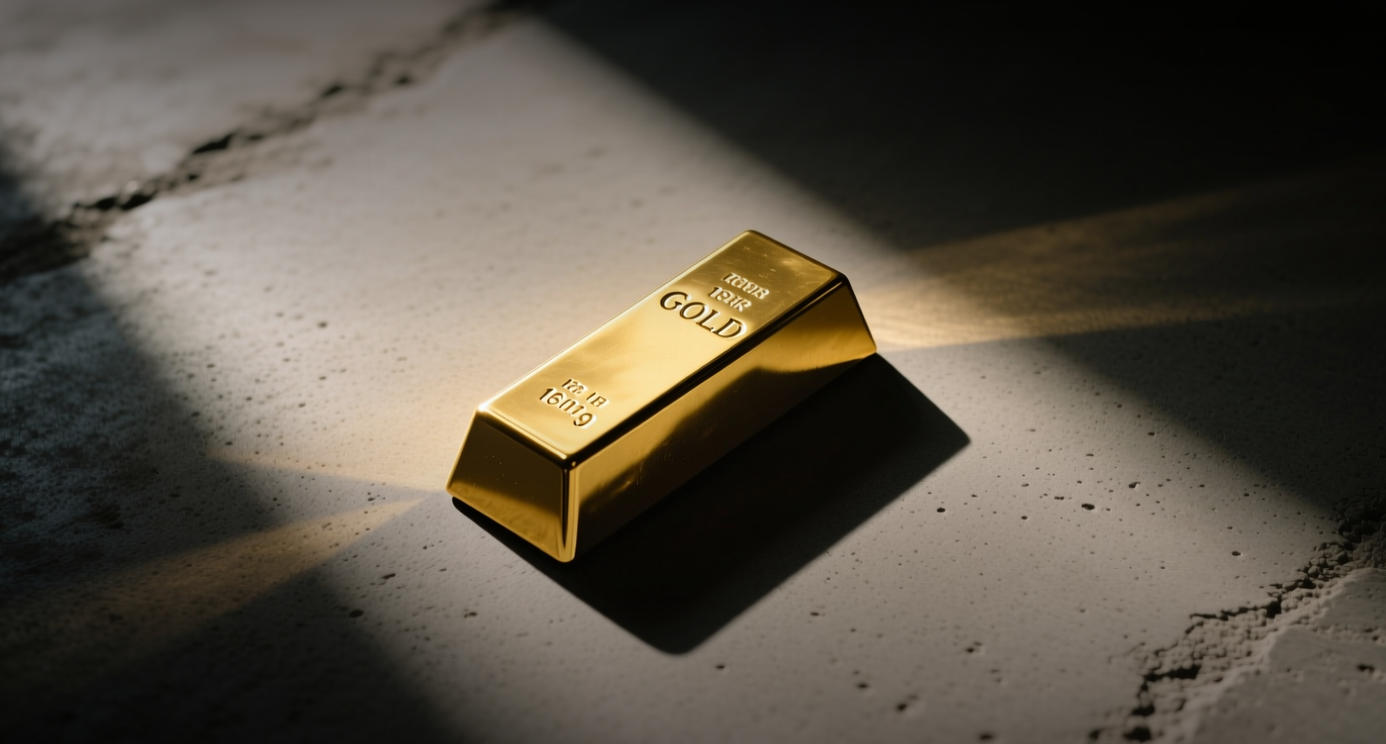
The precious metals rally that ran through 2024 and 2025 has stalled, and whether gold and silver have set their cyclical lows now depends on the interplay between monetary tightening and fiscal largesse, according to CME Group's chief economist.
Gold peaked near $4,850/oz in January 2026 before retreating to around $4,123/oz, a decline of roughly 15 percent from the cycle high. Silver followed a similar trajectory, falling from above $70/oz to about $60/oz. The turning point came on Jan. 23, when news broke that Kevin Warsh would be nominated as the next Federal Reserve chairman, signaling the end of the central bank's accommodative era.
"The run-up in precious metals prices appeared to have been based on three market narratives: heightened concerns over the independence of major central banks, central banks cutting rates despite core inflation remaining above target, and government budget deficits running at historically elevated levels," Erik Norland, managing director and chief economist at CME Group, said in a note published Thursday.
The Fed's pivot was confirmed at Warsh's first FOMC meeting in mid-June, when the committee dropped its easing bias and opened the door to future rate hikes. The shift did not happen in isolation. The European Central Bank, the Reserve Bank of Australia and Norges Bank have all followed the Bank of Japan in raising interest rates, while Fed Funds futures now indicate the Fed itself could tighten policy this year.
Higher rates are inherently bearish for precious metals because they elevate the opportunity cost of holding non-yielding assets such as gold and silver. Core inflation remains sticky across most developed economies, but Norland argued it is the policy shift, not the inflation data itself, that has changed how investors are positioning.
The One Pillar That Hasn't Moved
While central banks tighten monetary policy, fiscal policy remains extraordinarily loose. From the U.S. and Japan to France, Germany, the U.K., China and Brazil, governments continue to run abnormally large budget deficits. Japan's benchmark bond yield recently hit a 30-year high amid concerns over inflation and fiscal health, underscoring the scale of the debt challenge.
"Longer-term, the direction of budget deficits could play a determining role in the outlook for precious metals and long-term bond yields," Norland said. Any coordinated political effort to rein in deficits could lower long-term yields and reduce the structural lure of precious metals, he added.
Gold at current levels remains well above its 10-year average of roughly $1,800/oz and about 15 percent below the all-time high set in January. Silver trades at roughly three times its 10-year average of about $20/oz. The divergence between tightening monetary policy and loose fiscal policy creates an unusually uncertain outlook for both metals.
"The precious metals rally is paused, but not necessarily over," Norland said. "The variable that ended the bull run has shifted. The one that could restart it has not."
Markets will be watching the Fed's next moves, the trajectory of core inflation and any credible signs of fiscal policy shifts as the key determinants of whether gold and silver have indeed bottomed.
This article is for informational purposes only and does not constitute investment advice.