

Apple is pursuing chip company acquisitions and China AI approval in a two-front push to strengthen its AI infrastructure.
Apple is pursuing chip company acquisitions and China AI approval in a two-front push to strengthen its AI infrastructure.
Apple is pursuing chip company acquisitions and China AI approval in a two-front push to strengthen its AI infrastructure.
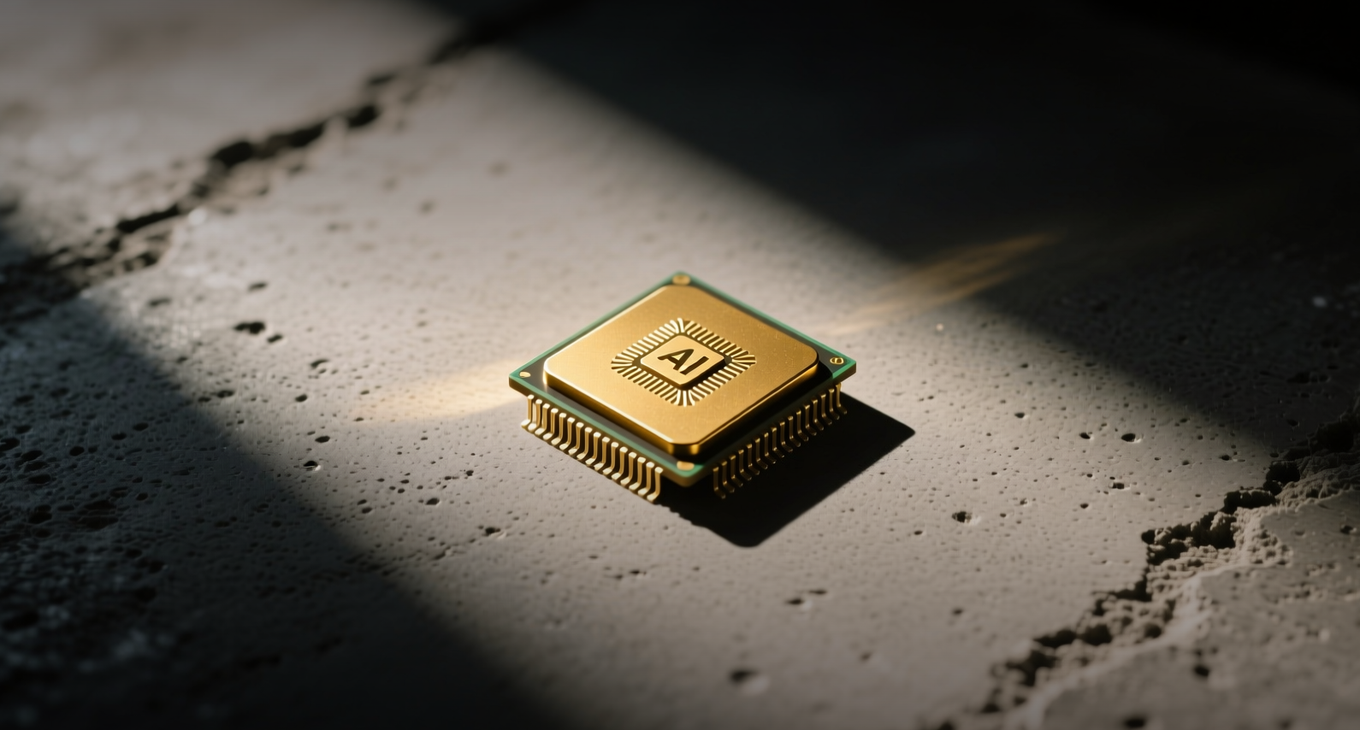
Apple Inc. is pursuing acquisitions of chip companies to build server processors for artificial intelligence, challenging Nvidia Corp.'s dominance in the data center semiconductor market valued at more than $200 billion.
"Qwen will be integrated into Apple Intelligence experiences within iOS, iPadOS, macOS, and visionOS for users in China," an Alibaba spokesperson said, confirming the partnership after Chinese regulators approved Apple's AI service for use in the country.
The Cyberspace Administration of China included Apple's generative AI on a list of newly approved providers alongside offerings from Huawei Technologies Co. and Xiaomi Corp. Alibaba's US-listed shares rose 4% in premarket trading Wednesday. Apple's acquisition strategy targets smaller chip startups with expertise in server-grade processor design, The Information reported, citing people familiar with the matter. The company has been developing in-house server chips distinct from its A-series and M-series processors used in iPhones and Macs.
The dual push — building custom AI silicon while expanding Apple Intelligence's reach into China — signals Apple's deepening commitment to AI infrastructure. Nvidia commands an estimated 80% share of AI accelerator shipments, and Apple's in-house server chip effort could reduce its reliance on external GPU suppliers, potentially saving billions in procurement costs over time.
The China approval follows a lengthy regulatory process since Apple Intelligence was first announced in June 2024. The technological rivalry between the US and China has intensified as both countries compete for dominance in AI. Earlier this month, Alibaba banned employees from using Anthropic's AI models, while US lawmakers are considering curbs on American companies' adoption of Chinese AI technology. Meta Platforms Inc. was reportedly forced to dismantle its $2 billion acquisition of Chinese company Manus after Beijing ordered the deal unwound.
Apple's partnership with Alibaba gives it access to Qwen, one of China's leading large language models, for on-device AI features including text summarization, image generation, and contextual assistance. The integration covers iOS, iPadOS, macOS, and visionOS — Apple's full device ecosystem in China. Apple had previously been in discussions with Baidu Inc. about integrating its Ernie model, but the Alibaba deal ultimately prevailed.
Separately, PrismML, a Khosla Ventures-backed spinout from the California Institute of Technology, publicly released compressed versions of Alibaba's open-source Qwen model on Tuesday. The company said it reduced the model from roughly 54 gigabytes to less than 4 gigabytes, allowing all 27 billion of its parameters to run on an iPhone 15 or newer. PrismML's CEO told CNBC that Apple is in talks with the startup about its compression technology, which shrinks powerful AI models enough to run directly on a device without cloud connectivity. The compression breakthrough addresses a key challenge for on-device AI: large language models typically require cloud servers to run, creating latency and privacy concerns. Running models locally eliminates the need to send user data to external servers, a feature Apple has emphasized in its privacy marketing.
Apple trades at roughly 30 times forward earnings. A successful server chip program could reduce its reliance on Nvidia and Advanced Micro Devices Inc. for AI processors while potentially saving billions in annual procurement costs. For Alibaba, the Apple partnership provides high-profile validation of its Qwen model in the competitive Chinese AI market, where it competes with Baidu Inc.'s Ernie and ByteDance Ltd.'s Doubao. Alibaba's ADRs have gained 4% on the news, though the stock remains down year-to-date amid broader concerns about China's technology sector and regulatory environment.
This article is for informational purposes only and does not constitute investment advice.