


Key Takeaways:
- Akamai embeds Guardicore Segmentation into NVIDIA Vera BlueField-4 STX silicon.
- The solution enforces Zero Trust policies at up to 800Gb/s without taxing GPUs.
- Core integration arrives in 2H 2026; STX platforms follow in 1H 2027.
Key Takeaways:
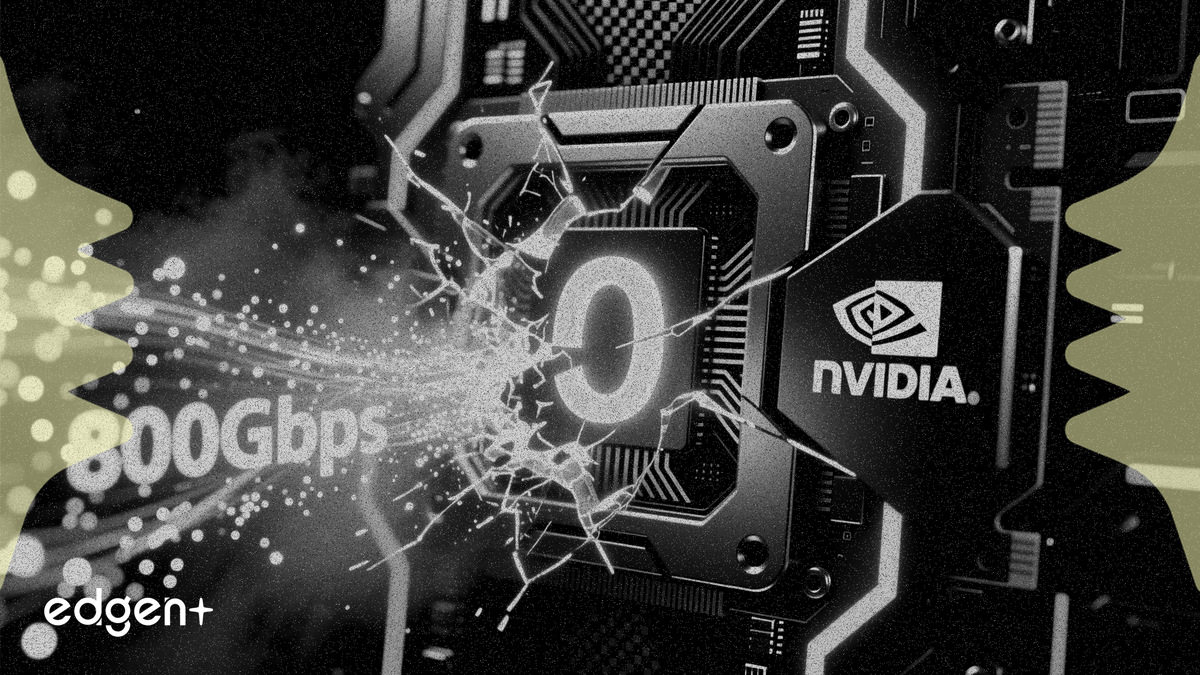
Akamai and NVIDIA are embedding Zero Trust security directly into the silicon powering AI factories, removing the trade-off between speed and protection.
Akamai is integrating its Guardicore Segmentation software into NVIDIA's Vera BlueField-4 STX storage processor, bringing workload-aware Zero Trust enforcement to AI factories at line speeds of up to 800 gigabits per second. The expanded collaboration, announced Tuesday, layers security into the infrastructure fabric where AI workloads — training pipelines, inference services, and autonomous agents — communicate and access data.
"In environments where every clock cycle matters, traditional host-based security tools behave like a speed bump on a racetrack," Ofer Wolf, senior vice president of enterprise security at Akamai, said. "By moving workload-aware segmentation onto NVIDIA Vera BlueField-4 STX and DOCA, we are enforcing Zero Trust at the speed of AI workloads themselves, helping organizations contain threats before they spread across high-performance environments."
The integration combines Guardicore's agentless visibility and policy engine with NVIDIA's DOCA security stack — comprising DOCA Vault for authorized file access, DOCA Argus for agent behavior visibility, and DOCA Flow for network isolation. Policies are defined by workload identity, application context, and runtime behavior rather than static network addresses, then enforced in BlueField-4 silicon at the data path level. NVIDIA claims the solution delivers runtime threat detection up to 1,000 times faster than existing agentless runtime alternatives while preserving GPU and CPU cycles for AI computation.
"Data is the foundation of agentic AI factories, powering the intelligence behind autonomous decision-making and making robust protection more critical than ever for enterprises," Kevin Deierling, senior vice president of networking at NVIDIA, said. "The Akamai Guardicore enterprise security platform and NVIDIA Vera BlueField-4 STX brings a Zero Trust layer directly into the infrastructure fabric."
The architecture addresses a structural problem in AI infrastructure: AI factories are being built faster than they can be secured. Until now, operators faced a choice between fast AI and secure AI. By moving enforcement into BlueField-4 silicon — the same chip handling storage and data movement — the combined solution limits the blast radius of any compromised workload to a small, identified segment while the rest of the AI factory continues operating uninterrupted.
Who wins, who loses
For Akamai, the partnership extends its cybersecurity franchise into the fastest-growing segment of enterprise infrastructure. Guardicore Segmentation already protects some of the world's largest organizations; adding NVIDIA's AI factory ecosystem as a distribution channel opens a new revenue stream tied directly to AI infrastructure buildout. Akamai shares closed at $154.00 on Monday, up 2.99% on the news, though volume at 3.5 million shares was roughly half the 20-day average.
For NVIDIA, embedding security into BlueField-4 STX strengthens its value proposition as enterprises move from AI experimentation to production-scale agentic deployments. The company's Vera BlueField-4 STX, unveiled at GTC Taipei, is co-designed as part of the Vera Rubin GPU system and functions as both the storage processor and data-path security engine. A broad ecosystem of cybersecurity partners — including CrowdStrike, Palo Alto Networks, Check Point, and Zscaler — and storage providers such as Dell Technologies, NetApp, and VAST Data are building STX-based platforms.
The core Guardicore integration with NVIDIA BlueField and DOCA is expected in the second half of 2026. Integration with Vera BlueField-4 STX on storage and infrastructure partner platforms is targeted for the first half of 2027.
This article is for informational purposes only and does not constitute investment advice.
