

Key Takeaways:
- AVAV targets $3.5B-$4B revenue by fiscal 2030, nearly doubling from $2B.
- Fiscal 2027 will be a heavy investment year with roughly $300M in capital spending.
- RBC Capital downgraded AVAV to Sector Perform, citing execution risk.
Key Takeaways:
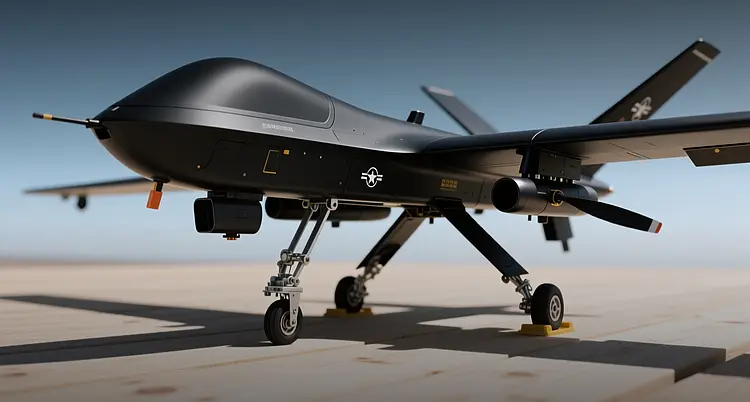
AeroVironment outlined plans to double revenue to as much as $4 billion by fiscal 2030, driven by surging demand for defense drones and counter-UAS systems.
"We have built our portfolio very deliberately, to meet the rising demands of the pretty much highest-priority items that are in the U.S. Department of War's strategic needs and capability gaps," Wahid Nawabi, chairman, president and chief executive officer at AeroVironment, said at the company's 2026 Investor Day in New York.
The Monrovia, California-based company targets compound annual revenue growth of 15 percent to 20 percent from fiscal 2026, when it generated nearly $2 billion in revenue with $2.7 billion in total backlog and adjusted EBITDA margins of 14.5 percent. By fiscal 2030, AeroVironment expects adjusted EBITDA to reach $630 million to $800 million, implying margins of 18 percent to 20 percent. The company plans capital expenditures of 12 percent to 14 percent of revenue in fiscal 2027 — roughly $300 million — to expand manufacturing capacity across facilities in New Mexico, Utah, Alabama and California.
The targets come as AeroVironment's total addressable market has expanded to more than $80 billion from about $30 billion two years ago, reflecting the Pentagon's increasing focus on unmanned systems and counter-drone capabilities. Chief Growth Officer Church Hutton said the company sees more than $35 billion in opportunities through fiscal 2030, spanning multi-mission intelligence, surveillance and reconnaissance, strike, counter-UAS and space technologies.
AeroVironment, which has fielded more than 60,000 systems across 55 countries, is organized into two segments: Autonomous Systems and Space, Cyber and Directed Energy. The company's counter-drone portfolio includes Titan RF jamming systems, LOCUST laser weapon systems and Freedom Eagle-1 kinetic interceptors. Mary Clum, president of Space, Cyber and Directed Energy, said the LOCUST system has been tested on multiple vehicles and in a containerized configuration for Navy use.
International sales reached more than $500 million in fiscal 2026, representing about 28 percent of total revenue, with demand concentrated in Europe, Latin America, the Middle East and Asia-Pacific. Chief Financial Officer Sean Woodward said the company expects the international share to increase by fiscal 2030.
Not all analysts are convinced. RBC Capital Markets downgraded AeroVironment to Sector Perform following the Investor Day, citing risks from flat defense budgets, heavy investment needs and skepticism about sustained rapid revenue growth and margin expansion. The elevated capital spending could result in negative free cash flow in fiscal 2027, with positive free cash flow not expected until fiscal 2028, Woodward said.
The growth plan is primarily organic, Nawabi said, though mergers and acquisitions remain a tool to fill capability gaps. The company has reduced its supplier base to about 1,400 from more than 3,000 a year ago, with 98 percent of parts compliant with the National Defense Authorization Act.
The revenue targets signal that management expects defense drone spending to remain a Pentagon priority despite broader budget constraints. Investors will watch for contract awards under the more than $35 billion pipeline, including the Army's Enduring High Energy Laser program, as a measure of execution against the long-term plan.
This article is for informational purposes only and does not constitute investment advice.